I’m giving an academic conference paper tomorrow at the Rhythm Changes jazz cultures research conference at Media City in Salford. My presentation’s centred around the Auckland jazz scene in the mid to late 1990s.
There are some interesting aspects to that scene: the cross-pollination between local hip hop and jazz, the influx of Australian musicians, the jam sessions at Manifesto wine bar, the radio shows, the clubs and DJs, the records that got released, and lots more besides.
The bit that I find fascinating – and it’s something I’ll talk about in my paper – is that all of these things were enabled and supported by a whole range of factors that have little if anything to do with music production, distribution and consumption cultures.
For instance, after the financial crash in the late 1980s, Auckland inner city office space vacancy rose from just 3% to over 25%, prompting a desire to fill those spaces with residential tenants for the first time. The influx of residents coincided with a rise of cafe culture in the CBD, the widespread adoption of the world wide web, the gentrification of the inner-city suburbs and other demographic shifts in Auckland’s population spread.
At the same time, radio (both public and private) was undergoing profound change, altering its relationship with both jazz and local music; and international movements such as Acid Jazz and Trip Hop were having an impact – as were international visitors, including Gilles Peterson, Massive Attack and Roy the Roach.
Young players were returning from formal jazz education in the USA at a time when the neo-classical agenda was almost at its peak, and they were dressing in suits and playing in art galleries – as well as taking this revisionist strain of music heritage into high schools. But these same players were, by night, collaborating with funk drummers, rappers, DJs and electronic musicians, guesting on local pop records and performing in multiple different combinations outside cafes, in parks and in bars.
CD sales – especially those that were about replacing existing vinyl collections – had started to hit their peak and the prices had begun to drop. So a classic Miles Davis record would sit on the shelf at Marbeck’s Records for a third of the price of a recent local release.
At the same time as the Auckland inner city jazz scene, as perhaps typified by Nathan Haines circa the Shift Left album, Sydney’s Jazzgroove movement was underway. Some of the artists visited New Zealand at the right time to intersect with it, and were exposed to some of the local conditions and frameworks. But what happened in Sydney was very, very different – and the music that resulted out of those two cultural projects was markedly so.
My point – and I do have one – is that these things are messy. It’s complicated. And so in a way, the Auckland example is entirely unique and unreplicable. And in another sense, it’s completely universal. These things are very different for all sorts of reasons. There’s never just one.
Looking forward to telling this story, drawing conclusions and maybe playing a little bit of kiwi music along the way.
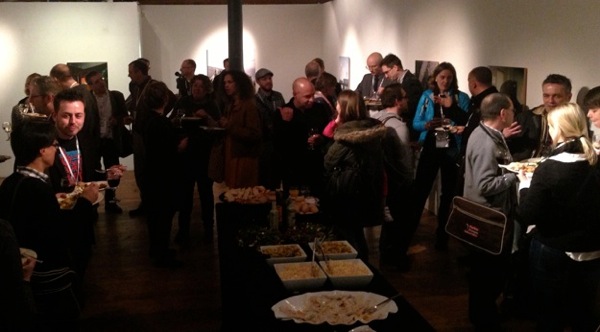
I’m in Manchester for an academic conference about jazz. It’s the final major event of Rhythm Changes, the three-year European jazz research project I’ve been working on, and it is, by all accounts, the largest academic jazz conference EVER (in Europe).
There must be literally tens of people here.
One of the great things about researching in a field like this is that you get to know most of the people pretty well and you tend to see them at pretty much every work-related event you go to. For the most part, they’re pretty cool people too.
They like jazz, for a kick off – and given that they’re predominantly PhDs and Professors in related fields, they tend to be (though this is by no means a rule) generally smart and interesting people.
I’m giving a paper on Saturday morning on the social, cultural, infrastructural, political and economic conditions that led to a very particular and very vibrant jazz/dance/hip hop crossover music scene in Auckland in the mid to late 90s. I’m also chairing a couple of panels on jazz and the internet.
So… I’m here to work. That said, you might not think so – but this is a party crowd. They’re a good bunch and some of my favourite people are among their number. They carry on until very late, they squeeze every last drop of jazz juice out of the local nightlife and they listen to (as well as make) sounds that would terrify most ordinary music consumers.
Take our evening’s opening entertainment, for instance. This was our polite dinner music before we got onto the harder stuff as the evening progressed.
Me, on the other hand, I’m back in my hotel room eating room service fish and chips, doing a bit of writing work and tweaking the project website. I just don’t have the stamina or the commitment to the cause needed to get me drinking schnapps and singing classic trumpet solos in the street at four in the morning.
This group of people just spent a week living, eating and working together, performing jazz music in multiple different combinations, composing new music, learning new techniques and approaches, putting on concerts, holding jam sessions until dawn, drinking, laughing and generally having an amazing, creative, exhausting and life-changing time.
A lot of them have done it before. It happens every year. National Danish jazz agency Jazz Danmark hold the annual Summer Session at Vallekilde, and have done since 1969. Each year, professional musicians from around the country (and some from further afield) come to this unique intensive jazz ‘camp’.
Guest workshop leaders – world class players – come along and work with the musicians, new collaborations are formed, minds are expanded and sights raised for all of the people in attendance. It’s really quite an inspiring environment.
Last night was ‘party night’ at Jazz Danmark’s Summer Session.
The musicians have been working from morning until late at night (and beyond) for almost a week now, and the organisers figure that this is a good point for them to cut loose a little bit.
There was a surprise element this time, which nobody was prepared for and it went down really well. Probably the oddest jazz gig I’ve ever been to.
The Fringe (George Garzone, Bob Gullotti and John Lockwood) sometimes do this thing where they dress as Neanderthals and give a particularly ‘primitive’ spin to their avant-garde jazz improvisation. This time, the Summer Session organisers thought they’d take it a step further and dress Joe Lovano up as some sort of ‘man from the future’.
Last night was the concert performance by all of the visiting teachers at Summer Session.
George Garzone (sax), John Lockwood (bass), Bob Gullotti (drums), Joe Lovano (sax and clarinet), Judi Silvano (vocals), Rebecca Martin (vocals and guitar), Larry Grenadier (bass), Lage Lund (guitar), Tyshawn Sorey (drums), Ralph Alessi (trumpet) and Enrico Pieranunzi (piano) played an amazing selection of music in small groups, different combinations, and then, finally, all together on an incredible, free version of Ornette Coleman’s Lonely Woman.
I was in the front row, and it wasn’t the biggest performance space in the world, so Joe Lovano was virtually sitting in my lap, while Ralph Alessi’s trumpet was more or less right in my face.
I'm an author of books about technology, culture, music and radio. I'm also an award-winning broadcaster and filmmaker, a public speaker and lecturer, record producer and festival director. I am closely following developments in emerging technologies and the cultures and ethics surrounding them, and my projects typically focus on issues of justice, inclusion, and sustainability.
Most of my work involves surrounding myself with incredibly smart and talented people who would have no other reason to ever be in the same room as each other. That's when amazing things happen.
I tend to talk a lot about music (often jazz-adjacent and particularly on vinyl, but also playlists and mixtapes). I'm enthusiastic about food and cooking, the intersection of art and science, new technologies, vintage technologies, education, social progress, silence, innovation, narrative, data commons, culture, sound art and the spoken word. This blog will continue to reflect those diverse and shifting enthusiasms. I may also digress.
I'm from Tāmaki Makaurau / Auckland in Aotearoa New Zealand, I have Scottish ancestry, I've spent a decade in the south of Birmingham UK, and another in a forest in the north of Sweden.
Contains information related to marketing campaigns of the user. These are shared with Google AdWords / Google Ads when the Google Ads and Google Analytics accounts are linked together.
90 days
__utma
ID used to identify users and sessions
2 years after last activity
__utmt
Used to monitor number of Google Analytics server requests
10 minutes
__utmb
Used to distinguish new sessions and visits. This cookie is set when the GA.js javascript library is loaded and there is no existing __utmb cookie. The cookie is updated every time data is sent to the Google Analytics server.
30 minutes after last activity
__utmc
Used only with old Urchin versions of Google Analytics and not with GA.js. Was used to distinguish between new sessions and visits at the end of a session.
End of session (browser)
__utmz
Contains information about the traffic source or campaign that directed user to the website. The cookie is set when the GA.js javascript is loaded and updated when data is sent to the Google Anaytics server
6 months after last activity
__utmv
Contains custom information set by the web developer via the _setCustomVar method in Google Analytics. This cookie is updated every time new data is sent to the Google Analytics server.
2 years after last activity
__utmx
Used to determine whether a user is included in an A / B or Multivariate test.
18 months
_ga
ID used to identify users
2 years
_gali
Used by Google Analytics to determine which links on a page are being clicked
30 seconds
_ga_
ID used to identify users
2 years
_gid
ID used to identify users for 24 hours after last activity
24 hours
_gat
Used to monitor number of Google Analytics server requests when using Google Tag Manager