
This is much more important than it looks
I quite often speak about Music as Culture, and it’s the title of a panel session I’m going to be hosting in Colombia at Un-Convention Medellin next month.
I was asked to write a short piece to explain the concept, to be put into a conference booklet, and something was fresh in my mind today when the deadline approached – so I wrote about that.
Here’s what I wrote.
Music as Culture
As I write this, I’m listening through to a compilation that I just made for a friend, and am about to send to him.
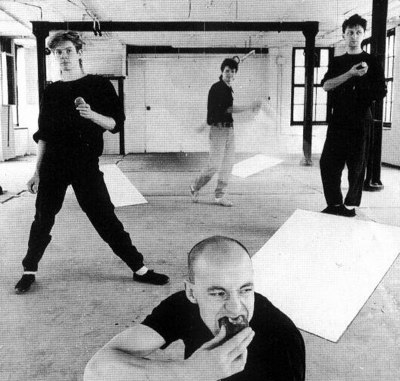
It’s a collection of music by a band called Shriekback, of whom I was an enormous fan 25 years ago – and who still record and release music today. My friend is a good 15 years younger than me, and the band is entirely new to him.
I wrote some notes alongside each tune, and I noticed as I wrote them that those notes are not so much a description of the songs, but a reflection of me and my life through music. As a music consumer, I did not simply discover, buy and then listen to Shriekback records. Those things happened, of course – but the meaning that band has for me goes far beyond any sort of mere shopping experience.
Music is about shared culture. It creates meaning. This is my memory. It connects me to friends long since lost (and some, sadly, gone forever) and even though I live in the UK, where Shriekback are from – the music connects me to my home back in New Zealand, where I grew up listening to the records, seeing the band in concert, playing them on student radio and carrying those tunes around as a soundtrack to my own life – which had nothing at all to do with either the motivation for, or the execution of those songs – and nor does it bear any lasting relationship to the commercial aspect of that music.
Shriekback might not have been the most commercially significant recording artist of the past 30 years by any stretch of the imagination – but they are, for whatever reason, one of the most significant recording artists of my life.
And yet, the mere fact of expressing (and, I suppose, explaining) who I am – my history, my culture, my self – through that act of creating a compilation of their songs for a friend is a pretty clear breach of copyright laws.
Now, that doesn’t mean that I think there shouldn’t be copyright laws, or that they don’t have an important function, but I think we’ve lost sight of what that function really is – and there’s a bigger picture here.
Music is not simply commerce. It’s not just a job, and nor is it simply property. Music is part of our shared heritage. It’s how we express celebration and mourning. It’s part of our national heritage and our civic pride. It is an activity shared by children and the elderly, not just key target demographics. It’s community and education. Music is not just a professionalised activity that we can passively consume. We build our identity and we express our individuality through music.
Music is unarguably culture first, and commerce second – but policy and legislation are created as if it were the other way around. And that’s because the people with the ear of the policymakers are, by and large, the corporations who depend on music as commerce, and defend their ability to restrict other uses of music through the ever-increasing reach and duration of their copyrights.
My point is that there’s a conversation that needs to happen. A conversation about the cultural importance of music. A conversation about archiving, preservation, research, fair use, education – and music as part of the public discourse, not just as a commodity.
And that conversation needs to start now – at this point in our history when radically new technologies allow us to do new and exciting things with music, and music-as-commerce conservatives wish to restrict us from doing those things… even if it’s just to share my love for a near-forgotten band with someone as part of a longer conversation we’re having.
It may seem trivial – but these conversations and expressions of meaning form the fabric of our life, our culture and our society. And these are the kinds of things I want to talk about. That’s just the tip of the iceberg of what the Music As Culture panel is for.
