Sep 1, 2026 |
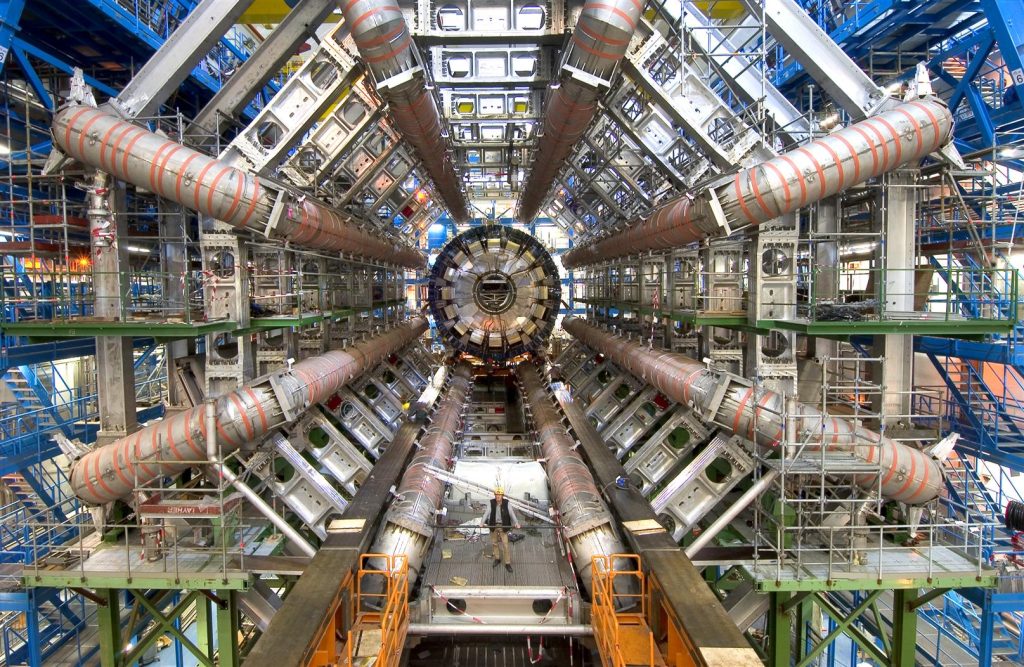
For most of the past year, Michela and I have been guest editing a special issue of the CERN IdeaSquare Journal of Experimental Innovation (CIJ) on the subject of co-creation. It’s finished now: twenty-six written contributions from around the world, plus our editorial, out shortly. And no, that is not a paid position, nor does it confer an honorary PhD in nuclear physics, but (in a phrase that will resonate with my musician friends) think of the exposure!
CIJ is a peer-reviewed journal of experimental innovation, published by IdeaSquare, the innovation space at CERN in Geneva. Michela was on their board of advisors for the last five years and we ran one of our labs there a few years back. CIJ is Diamond Open Access, which means everything in it is free to read, nobody pays to publish, and authors keep their own copyright. It also means I can share our editorial with you in full below, which is the point of this post.
The call for papers went out last September, and by the time submissions closed in March, there were far more than we could reasonably have expected. We imagined we’d get five. Ten at most. What followed was a year of the actual machinery of editing. There were four of us on the guest editorial team (Anne Dvinge and Ana Kuštrak Korper, alongside Michela and me), and we recruited nearly 50 experts (after approaching literally hundreds) so that each research article could be independently assessed by two external reviewers. Then the decisions, revisions, second rounds for the papers that needed them, and production that took us right up through August.
It’s been a huge part of what we’ve been up to for the last year, and it’s been escalating over the past few months, right up to the deadline. And we just brought it over the line, so I thought I’d share and then have a glass of something nice to celebrate. Enjoy.
Editorial: On co-creation
Andrew Dubber and Michela Magas
Guest editors, CIJ Special Issue on Co-creation
In a famous thought experiment, the philosophers Andy Clark and David Chalmers (1998) imagined Otto, a man with failing memory who carries a notebook holding what he can no longer remember. Because he consults the notebook as reliably as the rest of us consult our own recall, they argued, the notebook is not an aid to his mind but part of it. The argument could therefore be extended that you do not “collaborate” with an external intelligence source that you routinely deploy any more than Otto “collaborates” with his notebook. Intelligence has never been confined to the inside of the head. It has lived in notebooks, libraries, instruments and other people for as long as those have existed, and the extended mind now has a strange new annexe. From that perspective, working with AI is, in an important respect, not “co-creation” at all. It is simply creation.
McLuhan (1964) asserts that the content of any new medium is its predecessor. In the case of LLM model training, this is quite literally true, and not just a useful metaphor for unfashionable media studies theorists. There is a collaborative relationship at play, but it operates at a deeper layer, with the vast body of human work swallowed whole by the training data. You are not collaborating with AI. You are collaborating with everyone whose writing, speech and imagery the model has absorbed. Most of them were never asked, and none of them is credited, but you are collaborating with them all the same.
Yet the papers in this issue push back on both positions, and they are right to. In the pages that follow, a glacier holds a conversation. Harry Yeff’s paper describes an agentic voice system: an AI that speaks and listens, grounded in the research literature on the Thwaites Glacier in West Antarctica. At the AI for Good Global Summit in Geneva, it held more than 3,000 conversations, adapting what it knew of ice loss and sea level to each listener in turn. Co-creation is plainly not restricted to transactions between humans. There is co-creation with other species and living systems, as the immunologists and the ocean-dataset builders in these pages suggest. There is co-creation with place, whether a garden at CERN or the waterscapes of Kumasi. There may be co-creation with intelligences that are built rather than evolved, which does not make them unnatural: tool-making is among the most natural behaviours of our species.
Which leaves a genuine puzzle. How can we be in collaboration with an intelligence that exists beyond us but is also, on the prosthetic view, as much a part of us as Otto’s book is of him? Perhaps the simplest answer is that there is no conflict to resolve. The study of elusive, dual-natured phenomena is CERN’s trade. Physics made its peace long ago with entities that are two things at once, particle and wave, depending on how you look. The intelligence we now work with is at once our own, an extension of the collective human record, and separate from us, a sounding board with our own voice in it (the “pet self” as Yeff described it in our MTF Labs in Stockholm back in 2018).
This is why three pieces in the Journal’s conversational Coffee Paper format challenge us to consider how else we can co-create both with other humans and beyond. John Wood’s glossary of co-creation runs from abductive reasoning to his own coinage entredonneurship, ‘giving from between’ rather than ‘taking from between’, and pauses to calculate, via Euler, that a quartet offers six times the potential synergies of a duet. Marta de Menezes and Luis Graça, artist and immunologist, argue that art and the immune system are structural cousins: adaptive systems that turn encounter into development, draw robustness from diversity rather than uniformity, and are both, in their lovely phrase, poised toward what has not yet arrived. Kat Austen begins on a bus in Seoul and ends on the Irish coast, where around 100 handmade images from Galway coastal communities became the training data for a generative model trained entirely on renewable energy. The model helps people envision a liveable ocean future rather than remix the world as it is. Her question deserves to be quoted whole: “What if we build AI not on the fragments of the shape of the world that is, but on the shapes of the worlds to which we collectively aspire?”
From conversations with glaciers to grafting one’s partner’s cells on one’s body: that is the span of this issue. The question is who gets to make knowledge, with whom, and on whose terms. The range of the issue starts with definitions, then people and power, then places and structures, then machines, and ends with hope. This issue is about making knowledge together, across boundaries that often keep the makers apart. It is, by quite some distance, the largest issue this Journal has yet published.
A cluster of papers takes co-creation to places where the stakes are immediate, and the power relations are not abstractions. Barcham’s study of extended reality prototypes for climate resilience is written from the inside, from the author’s own Māori hapū (clan) in Hawke’s Bay. It shows how even a well-intentioned participatory process can reproduce colonial dynamics when data, platforms and resources remain in external hands. Lauterbach and colleagues hand the research process itself to musicians: an established highlife band and six community musicians in Kumasi, Ghana, who conducted their own fieldwork and co-wrote a song about urban water, on the understanding that a lyric can carry knowledge about living with polluted water that no policy document can convey. Saienko and colleagues work with six third-sector organisations in Dundee for whom, as one participant put it, “Data work is not a part-time undertaking”, and use participatory design both to surface and begin to redress that asymmetry of data power. Costa and colleagues take us into the boxing gym, where an embedded researcher, a former competitive boxer and referee, mediates between the mouthguard data and the lived expertise of athletes whose sport’s health evidence was built around men. Bugler and colleagues, working from a co-design project with young adults in Cape Town, ask a question every participatory researcher will recognise: when the workshop is over, and the analysis begins, can anyone retrace how the participants’ words became the researcher’s findings? Their answer, a discipline of traceability on a shared digital whiteboard, is one of the transferable and applicable gifts of this issue.
A second cluster examines the rooms and structures in which co-creation is staged. Suominen and Jussila look back at 17 educational hackathons in Finland and find that, across their cases, the ideas that survived the weekend were those where an external problem owner was present and the event had a deliberate afterlife. Their evidence includes a student concept, brewed from a food company’s surplus cucumbers, that ended up on shop shelves, and a recurring failure they call the torso problem: a well-built event with no afterlife. Bonucci and colleagues compress co-creation into 90 minutes at the Brussels final conference of ATTRACT, the EU initiative to turn big-science technology into applications. Even under those constraints, they show that 25 mixed teams can produce comparable, analysable pathways from big-science resources to societal challenges. Hofmann and Alliss bring school students into MRI sequence development at a Fraunhofer institute in Bremen, with glass art as the bridge: the glass appears in the scanner as negative space, and the students’ reported understanding of the physics rose dramatically over two days. Beigel asks how the paradoxes of structured freedom shape co-creation in learning and teaching, where the invitation to co-create is itself a form of structure. Bartoloni and Strigari trace how astroparticle physics and space radiobiology built a shared practice out of what the literature calls boundary objects, artefacts that both sides can hold on to: a shared ontology, dose-effect models, curated datasets. The paper proposes tools for logging who decided what, and who is owed credit, in cross-domain work. Tanaka and Ito describe a project that lives permanently at CERN: a garden of suspended silk threads in lilac, wisteria and violet, designed with students from two universities in Japan through the lens of Japanese aesthetics and particle physics, begun in 2018 and completed through the pandemic, and the practical constraints of building anything at CERN. Clarke and colleagues propose that a participatory sound platform with some 10,000 users can be governed as an experimental data commons for health research, provided consent, provenance and attribution are engineered in from the start.
A large share of the submissions we received concerned artificial intelligence, and we accepted the strongest of them, in part, because they disagreed with one another. Gelner and colleagues pitted six engineers against an enterprise language model on a corpus of battery-test reports and found the machine to be faster, but more often wrong. Tellingly, it could not conclude that an answer simply was not in the documents, a judgement all six engineers made correctly. Silver, Morrow and De Paoli’s methodology draws a firm line: in the TALLMesh workflow for thematic analysis (the craft of finding the themes in a body of interviews and texts), the language model processes patterns but “does not function as an analyst or collaborator”, and accountability stays with the researcher. Ochiai proposes an AI convenor for multi-domain co-creation and, with the understanding that convening is a form of power, sets hard boundaries and escalation rules before facilitating anything. Zampirolo and colleagues treat the governance of AI itself as a co-creation problem, to be worked out by the people who share the dilemma rather than specified top-down. Shen and Iandoli teach students to prompt critically and watch their creative agency grow rather than shrink. Quiñones Gómez surveys professional designers and maps the roles and responsibilities they actually grant AI in their work, and finds that trust follows transparency rather than sophistication. Etezadi and colleagues’ experiment uncovers a creativity discount: teammates known to use AI are rated less creative, and disclosure makes it worse. While a small study, it should give pause to anyone drafting a disclosure policy. Riznyk proposes community-owned linguistic datasets governed by collective vote, so that the languages that feed the models remain the possession of their speakers. Finally, Yeff, whose glacier opened this editorial, makes the boldest claim of all: that adaptive, listener-calibrated conversation is itself a co-creative act, and that meaning made this way belongs to neither party alone.
=======
It is hard to imagine a better home for an issue on co-creation than this journal. CERN is itself among the great standing demonstrations of co-creation: between nation-states, between disciplines – art and science meeting at the highest levels – in pursuit of the smallest constituents of the natural world and their own powerful interactions. Its commitment to Open Science extends the collaboration across time and distance to people who will never visit Geneva. That practice runs through this issue too: the aggregated data summaries and governance protocols behind Clarke and colleagues’ participatory sound platform are already openly deposited in the Journal’s community on Zenodo, CERN’s open repository for research data, where anyone may build on it.
If the intelligence we now work with is indeed dual-natured, then CERN is the right context in which to examine it, and if anyone were to build a particle accelerator and collider for intelligence, IdeaSquare – CERN’s experimental innovation space from which this journal takes its name – is exactly where you might expect to find it. One of us served a five-year term on the Advisory Board of IdeaSquare, and recognised in it something we knew from first-hand experience: what it takes to give a co-creation community a home.
We have over sixty years of co-creation practice between us, across design, media, data-driven technologies and the industries built on them. Since 2012, first as Music Tech Fest and then as MTF Labs, we have run 26 international events where scientists, artists, engineers, inventors, industry experts, and policymakers spend an intensive week building things together. In 2023, we brought the lab format to IdeaSquare itself, gathering New European Bauhaus thought leaders in think-and-do sessions in person for the first time. The community that has grown around those nomadic events now numbers 9,000 people, and one of its defining features is that nobody in the room is an expert on everything; everybody is an expert in a particular knowledge domain, and we progress by connecting the dots under the banner of grand missions such as Ecosystem Living or JUST Data. The community of the MTF Labs ‘intelligence collider’ vastly exceeds the attendance at any one of its collisions, and if, as Wood has it, four nodes offer far more possibilities than two, then 9,000 is a much bigger number than it appears.
The MTF Labs community has yielded a non-profit research institute, the Industry Commons Foundation. This is where the strange new annexe of the extended mind gets its architecture. Our project GRAPHIA is building an open knowledge graph for the social sciences and humanities: a connected map of the field’s data that machines and people can both navigate. LUMEN is building federated discovery across scientific domains, so that a researcher in one field can find and use what another already knows. A language model on its own is a rear-view mirror, fluent about where we have been, but a poor navigational tool. Grounding it in verified knowledge, in facts and ontologies, is what makes it a trustworthy companion for where we are going, and that grounding is precisely what these infrastructures exist to build. In both projects, co-creation is a major research stream: it powers the innovation labs and is proving remarkable both as a way of generating new knowledge and as social glue for researchers working in diverse domains. We read Wnuk and colleagues’ account of the OPERAS Innovation Lab, five years of work drawing on 655 participants from 33 countries, with more than usual interest: OPERAS is a partner in both projects, and their co-creation workshop, in October 2025, ran at our Innovation Prototyping Lab in Zagreb.
Co-creation has become a working method within European research infrastructures, and it now turns up where nobody would once have imagined it. This includes large industrial AI programmes such as our project EuroFMX, where Test and Experimentation Facilities stimulate innovation co-creation processes, LLMs reference novel industrial ontologies, and Living Labs are deployed as a validation methodology. The value that emerges from all these experiments belongs to no single field and usually to no single person. That is the kind of co-creation we know first-hand, and it has informed our approach to this journal: a working familiarity with what happens in the space between knowledge domains.
It is also how this editorial team came together: we know our fellow guest editors, Anne Dvinge and Ana Kuštrak-Korper, through the MTF Labs community. Anne is Senior Innovation Advisor for the social sciences, humanities and the arts at UCPH Lighthouse, the University of Copenhagen’s innovation unit. She spent a decade as a music researcher, then founded Low-Fi, a platform that turned private living rooms into concert venues, with each event co-created by musicians, hosts, and audiences in cities from Copenhagen to Santiago. These days, her role is in helping researchers across the humanities translate their knowledge into impact. Ana wrote her doctorate on the role of service design in service innovation, a field in which co-creation is not a topic but the working method, and she now puts that research into practice as innovation coordinator and civic designer in the Mayor’s Office of the City of Zagreb, while keeping a research foothold at Linköping. Both know the lab process from the inside, both brought their own disciplinary depth to the editorial table, and each handled a substantial section of this issue from first assignment to final recommendation. We are extremely grateful to them both.
We make no secret that some of the authors, too, are known to us through that same community, and that over the years several have become friends. Every research article here nonetheless passed rigorous peer review, exactly as it would in any issue of any other serious journal, and the price is that we have had to reject work by thinkers we know, respect, and will likely work with again. The reviews were anonymous, the standards were the Journal’s, and friendship bought nobody an easier ride. The same discipline ran the other way: Matteo Vignoli, the Journal’s Editor-in-Chief, is a co-author on one of the papers in this issue, and took no part in any decision concerning it. We are grateful to Matteo for his guidance and to the wonderful Valeria Brancolini at CIJ, who kept things on track and kept us moving, while handling record numbers of papers for typesetting.
Our thanks go to Alexandra Antonopoulou, Tarsh Bates, Fergus Bisset, Johan Blomkvist, Martina Čaić, Wanjun Chu, Andy Dearden, Alessandra Di Pisa, Sara Donetto, Ivo Emanuilov, Jeanette Falk, Lene Asp Frederiksen, Harald Fredheim, Visda Goudarzi, Hanna Louise Grønneberg, Anne-Sophie Guernon, Stefan Holmlid, Mark-David Hosale, Jamer Hunt, Liesbeth Huybrechts, Petter Karlström, Iva Kostešić, Ian Lambert, Laura Aakjær Larsen, Tau Ulv Lenskjold, Sara Lenzi, Marianna Lubanski, Agathe Malbet, Peter Meister-Broekema, Samuel Moore, Andrijana Mušura, Alexander Nolte, Divya Persaud, Sebastian Porsdam Mann, Emily Rempel, Matteo Romanello, Gergana Romanova, Vitaliy Roud, Clara Saglietti, Ann Shivers-McNair, Lina Svensberg, Francisco Teixeira, Tine Thorup, Horácio Tomé-Marques, Claudia Westermann, Renee Wever, Åsa Wikberg-Nilsson and Anna Xambó Sedó.
Between them, they carried out the peer review for this issue, with several taking on more than one manuscript and many returning for a second round. Their time and care were given to work that was not their own. In an issue about co-creation, that fact is worth highlighting. Some of the work in these pages was carried through genuine difficulty, including bereavement, and we are conscious of what it took to bring it to completion. The special issue was co-created by the guest editors, the authors, the reviewers, the CIJ editorial team and, in a real sense, the subject matter, and that collaboration lives in the gaps between the articles as much as in any single text.
This collection, formed of diverse voices, experimental practices, researchers from outside the traditional academy, and methods built on inclusion, is deliberately positioned as a rebuke against the forces that simplify, brutalise and exclude, and in outspoken favour of the things they attempt to degrade: scientific understanding, intellectual pursuit, truth, beauty.
Acknowledgements
The guest editors’ work on this issue was supported by the European Union’s Horizon Europe research and innovation programme through the projects GRAPHIA (Grant Agreement No 101188018) and LUMEN (Grant Agreement No 101187940).
References
Clark, A., & Chalmers, D. (1998). The extended mind. Analysis, 58(1), 7–19.
McLuhan, M. (1964). Understanding media: The extensions of man. McGraw-Hill.
Dec 30, 2025 |
Like you (I assume), I’ve long since learned to cope with the paralysis that comes from access to the lion’s share of recorded music history at the press of a touch screen. The perceived challenge of infinite music has shifted from over- to underwhelm. The algorithms assume I’m predictable, and worryingly, they are right more often than not. Not so much a paralysis of choice, but the paralysis of being relieved of choice. Inertia, perhaps. Anyway, I seek a middle ground. I would like merely to be whelmed.
So this year, I have (perhaps unsurprisingly) deployed AI in the service of music discovery, though not in the passive ‘play me any old thing you think I won’t dislike enough to switch off’ way that commercial radio aspired to in the 1990s and, for all I know, may still do today. Instead, I have trained an AI agent on the kind of music I like to discover, the labels I like, the tastemakers I tend to agree with, the magazines that find what I consider to be ‘good music’, and I have sent it off on a weekly mission to seek out the new releases that might surprise, delight, challenge and amuse me. I’ve come across some good stuff that way. But I still do the listening and, importantly, the deciding. The AI is more of a helpful intern: “What about this one? Or this?”
I also go looking myself, of course, and Qobuz is pretty good at surfacing a bunch of new and interesting albums every Friday, but it also misses some that may appear on, for instance, The Quietus, Bandcamp Daily or, say, The Guardian, and my cyber intern is always checking those for what it is learning is “my sort of thing”.
As is traditional, I’ve waited until the actual end of the year to post this, and just as well. I found out about one of my highlights of 2025 literally just today, thanks to the end-of-year Irish music roundup radio show by a friend in Galway whose great taste I usually admire from afar, but which, every so often, intersects with my own. Besides, it just seems absurd to call the game in November when December releases are so often the ones that carry you through the darkest days up here in the wintry north.
So anyway, as you’ll no doubt know by now, these are not supposed to be the “best” records of the year (a nonsense idea, objectively speaking), but they are the ones that inhabited my world, and whose world I inhabited.
I’ve made three lists for 2025: TWENTY, TWENTY and FIVE. See what I did there?
Let’s start with the FIVE.
FIVE (favourite albums of the year)
So first up, here are my personal Top 5 albums of 2025. These are the ones you are welcome to judge me by.
1. Sierra Tracks – Vega Trails
There is a specific kind of quiet that is very hard to capture on tape (do we still say ‘tape’?) without it sounding sterile, but Vega Trails have somehow bottled it. This is the second release by Milo Fitzpatrick (Portico Quartet) and Jordan Smart (Mammal Hands) as Vega Trails, recorded after Fitzpatrick relocated to the mountains of central Spain. It’s basically chamber jazz, but it feels more like a conversation you’re overhearing in an acoustically pleasing room. They’ve expanded the palette: strings, piano, vibraphone – but the intimacy remains. This was easily my most listened-to album of 2025. Live with it for a while, and you may find it difficult to live without.
2. The Shieling – Fergus McCreadie
I was predisposed to love this. I’ve been following McCreadie’s output for some years, but The Shieling is, if not something entirely different, then a determined refocus and a confident recommitment to the project. Recorded in a remote cottage on North Uist in the Outer Hebrides, it manages to sound like the landscape it was born in: wild, elemental, and stubbornly beautiful. Like if a piano trio could not only play the tunes of a ceilidh, but dance them too. Produced by the brilliant Laura Jurd (whose own work appears later, as part of another list on this same post), it balances the trio’s technical fluency with a lyrical, Scottish-folk-infused melody that feels as old as castles. It is, in fact, extremely Scottish, in the best possible sense (a fireside dram, rather than a biscuit tin), which appeals to me for reasons that are likely as genetic as they are aesthetic.
3. Bag Vore Øjne Strømmer Drømme Sagte Forbi – Hvalfugl
I was in a record shop in Copenhagen recently (in truth, as often as I can), holding the three 10″ EPs that this album compiles, trying to justify the spend and additional carry-on luggage. I almost wish I had. The objects themselves are beautiful (and at some point we need to have a conversation about why all albums aren’t 10″ gatefold 180g vinyl pressings), but the music is transcendent. The band’s name means ‘Whale Bird,’ and the title translates roughly to “Behind Our Eyes Dreams Slowly Drift By,” which is about as accurate a description of the sound as you could hope for. It’s a self-released collection from the Danish trio, featuring guest musicians to broaden their usual scope. This is music that checks in to make sure you’re comfortable by the fireplace, then brings you a cocoa.
4. There Is Beauty, There Already – Sarathy Korwar
On paper, a continuous 40-minute percussion-led suite seemed like homework. I mean, I expected to appreciate it, nod politely, and move on. Instead, I played it 8 or 10 times in a row. Korwar has, I learned, always inhabited the territory of jazz, while sometimes kicking at the edges – but this feels more like a personal exploration of his own musical language. It’s process, not packaged product, and we’re invited to witness its evolution. It’s hypnotic rather than repetitive – a study in motion that pulls you into its own shifting time signatures, polyrhythms and tempos. It came fairly late in the year, but I’ve returned to it more than most, and usually when I need to remember how to think.
5. Under Tangled Silence – Djrum
This is what happens when glitchy electronica stops looking at the bedroom curtains and starts looking at the horizon. Djrum (Felix Manuel) has always been good – no, better than that: he’s always been interesting – but this record is a masterclass in texture. It blends classical piano, jazz structures, and shattered beats in a way that feels organic rather than Ableton surgery. Listen especially for the cymbals: wide-open, gorgeous, and now a recurring sonic character. Apparently, this album was a restart after a catastrophic hard drive failure wiped five years of work (back up your files, kids!). I’ve been there – and it’s painful (ask me about my almost completed Master’s dissertation one day), but something good always comes of it, though seldom anything this good.
TWENTY (albums that soundtracked my year)
A “Top 5” is an inherently cruel exercise. It suggests that everything else was second-rate or substandard in some way, which is patently untrue. If the five above were the records that I would like to say ‘defined’ the year for me, this next list contains the ones that made the year, at the very least, habitable, and at best, a pleasure to participate in.
These are the albums that soundtracked the daily routine. The ones I spun while cooking, that accompanied the dog walks and forest drives and the ones that kept the irritants of the world at bay while I worked, travelled and (occasionally) relaxed. They range from the “reliable old friend doing a cool new trick”, and “inspiring visit to an unexpectedly good art exhibition”, to the “warm bath I really needed at the end of one of those days”.
All of these were high-rotate, and so are, in the end, simply what 2025 sounded like, if you happened to be me.
1. Landscape from Memory – Rival Consoles
If you could make synthesisers weep…
2. The Importance of Birds – Snorri Hallgrímsson
Accessible Icelandic contemporary classical music. Nordic noir soundtrack waiting to happen…
Available on streaming services.
3. Elsewhere – Grandbrothers
A progression from their earlier (wonderful) ‘grand piano and electronics’ to ‘grand piano and even more electronics’…
4. Can You See Me Now? – Amanda Whiting
Welsh harpist with roots in spiritual jazz, an interest in hip hop and some talented friends…
5. The Eternal Now – Chip Wickham
Some of my favourite music comes, as this does, from my friend Matthew Halsall’s Gondwana Records label. This is up there with the best of those releases…
6. Necessary Fictions – GoGo Penguin
A shame this one is not on Bandcamp, though some of their other music is, and all of it is exceptional. This one moves the bar forward, with the addition of vocals in places and some exceptional writing…
Available on streaming services
7. Simple Things – Britta Virves
Estonian-born, Swedish-based jazz pianist. The sample track with vocals below is not typical of the rest of the album, which is closer to much of what I like about Fergus McCreadie (above)…
8. Sendas – Omar Sosa
Anything by Omar Sosa is worth a listen. This is delicate and subtle – and for a solo piano album, contains a lot of sounds that are not made by the piano…
Available on streaming services.
9. Music For Roads – Tuomo & Markus with Verneri Pohjola
Took me a few goes, but I got there. A road trip soundtrack album made by Finnish psychedelic folk rock artists (sigh) with an exceptional jazz trumpeter. But it’s okay. It’s jazz. It’s just jazz. Enjoy…
10. Pax – Tingvall Trio
A Cuban, a German and a Swede walk into a bar. I’ve listened to a lot of piano trio music this year, and this was one of my favourite examples…
Available on streaming services.
11. Our Calling – Piers Faccini & Ballaké Sissoko
Imagine if Nick Drake went to West Africa…
12. Orbits – The Circling Sun
Very happy to have some kiwi music in the mix, and very my sort of thing. Anything with Julian Dyne is an instant purchase, and Cam Allen is a bonus. Spiritual jazz from my spiritual (and literal) homeland…
13. Spindrift – Benjamin Lackner
Romantic piano jazz recorded in the South of France. What can I say?
Available on streaming services.
14 Poems for Travellers – Emil Brandqvist Trio
Nordic jazz trio. More of this sort of carry on – and very good at it…
Available on streaming services.
15. When It Rains It Pours – Shay Hazan
Tel Aviv based guimbri, bass and guitar player with a foot in tradition, another in jazz and his head in the kind of nightclub I’d actually still consider attending…
16. In the Wind of Night, Hard-Fallen Incantations Whisper – Širom
Slovenian inventors of folk music from imaginary traditions, using a huge variety of strange and sometimes unique instruments. This always works for me, and it’s not their first time in my year-end list…
17. Expanding to One – Phi-Psonics
Bigger band than is usually my thing, but these are some inclusive and community-minded spritual jazz heads, and I loved the previous two albums as well. They win me over every time…
18. Døgnville – Liv Andrea Hauge Trio
Rule of thumb: always check Erik Honoré’s Hubro record label. Not every release is for me, but it’s never not interesting. This was the most straight-up jazz I’ve heard from them, and it’s rock solid…
19. Memories of Home – John Scofield, Dave Holland
Absolute legends absolutely legending. Interesting fact: Dave Holland has worked with Miles Davis and also with me. Not at the same time. Not just a phenomenal all-time great bassist, but a very nice man… And Scofield is the guitarist’s guitarist, isn’t he?
Available on streaming services.
20. Shiraz – Dhafer Youssef
Beautiful album from the Tunisian composer, vocalist and oud master…
TWENTY (albums that brought joy along the way)
And then there were the records that made me smile.
While the previous list was constant companionship, this group was the spark. These are the gems that surprised me. The piece of cake discovered at the back of the fridge. Albums I might not have played every single day (and one I only just discovered in the last 24 hours, but which has already earned its place), but that provided what can best be called delight. Some are fun, some are deeply nostalgic despite being brand new, some are technically dazzling, and some just have a vibe that I couldn’t help but fall for.
It would be remiss of me not to bring them to your attention, because god knows we could all use a bit more joy.
1. GUSTO – Boko Yout
I tend not to do much ‘rock’ these days, but I saw the video for Gusto, and Boko Yout won me over with their “Afro Grunge”. Punk should have been this funny…
2. Sonor – Enji
Mongolian tradition meets serious jazz training. Beautiful voice and absolutely enchanting music…
3. MONUMENT – Shriekback
One of my favourite bands since 1980. Dark, funny, menacing and often solidly funky. Stomping grooves, underwater basslines, squirty synths and reptilian vocals. And you just can’t beat their lyrics. Plumed! starts: “I’m gonna manage the narwhal / I’m gonna handle the beast / I’m gonna scowl at the torpid owl and then call the police.” Wasps In Heaven references Tom Stoppard and Spinal Tap before diving into the sort of rhymes you’d only otherwise encounter if Stephen Fry took up battle rap. Anarchy you can dance (or slither) to.
Available on streaming services.
4. Onda – João Selva
The very first record I bought in 2025 – possibly because I was in need of some sunshine. Late afternoon Brazilian beachfront vibes…
5. Of The Near And Far – Patricia Brennan
The collision of art and science is at the heart of most of what I do, and I love it when it’s expressed so clearly, successfully and with such wonder. This is what happens when a phenomenal vibraphonist and composer becomes obsessed with the night sky…
6. Four Spirits – Abel Selaocoe
Oh, you think you know what a classical cellist does? Watch this.
Available on streaming services.
7. Changing Perspectives – Rebecca Trescher
Clarinet-led chamber jazz that warrants close attention and repeat listens…
8. Rites & Revelations – Laura Jurd
Sophisticated Scottish/English folk meets jazz with appearances from Jurd’s former bandmates from Dinosaur. She also produced one of my five favourites above, so a productive year…
9. In Holiday Clothing, Out of the Great Darkness – Clarice Jensen
Another cellist and composer, this time from the US, and armed with looping pedals…
10. Uncharted Waters – Arve Henriksen, Eivind Aarset, Terje Isungset
You should probably just assume Arve Henriksen will turn up somewhere in my list each year…
11. Mirra – Benedicte Maurseth
The sound of reindeer herding and reindeer herders in the north of Norway accompanies a Hardånger fiddle. I now have two albums matching this exact description, both by Maurseth, and I would happily buy more…
12. Konoma – Takuro Okada
One guitarist’s attempt to create ‘authentic’ Japanese Jazz…
13. Tyrchu Sain – Don Leisure
Translated literally: ‘Digging Sain’. Welsh DJ and beatmaker Don Leisure excavates the 55-year archive of the legendary Sain Records label to create a psychedelic, sample-heavy mixtape that feels less history lesson and more lucid dream…
14. Without Wind, Without Air – Roger Eno
Some hints at existential dread underlying the beautiful sonic paintings, but Without Wind, Without Air is not suffocating, just becalmed…
Available on streaming services.
15. Conversations – Alex Ventling & Kim Paterson
My friend Kim Paterson also happens to be one of my all-time favourite New Zealand musicians. I produced an album of his back in the 90s, and he played on many other sessions I recorded. He no longer plays, but he recorded this a little while back when he was in his early 80s. Some standards, some of his own tunes. Just a meeting between musical friends with the tape rolling…
16. New Dawn – Marshall Allen
…but Kim Paterson’s just a youngster in the grand scheme of things. This is 100 year-old saxophonist Marshall Allen’s debut solo record (though he’s led the Sun Ra Arkestra for decades)…
17. After the Wildfire – Jan Bang & Arve Henriksen
Like Arve Henriksen, I always reserve at least one space for Jan Bang on my end-of-year favourites list. And look – here they are together! This was commissioned for the Skopje Jazz Festival and features Macedonian Voices…
18. MYT – Moses Yoofee Trio
Winners of the 2024 German Jazz Awards Live Jazz Act of the Year, the Moses Yoofee Trio explore R&B, hip hop and soul through a jazz lens. Not the first to do it, sure, but they do it well…
19. Blizzard – Dove Ellis
Brand new to me, and a much-appreciated recommendation from my aforementioned Irish friend, Damien. Five-star reviews in the Guardian and elsewhere, and a rush by majors to sign this Galway talent, but all rebuffed. Comparisons to Tim and Jeff Buckley are well-founded, though there’s something else going on here. The line “Love is not the antidote to all your problems” sums up the tone. Falsetto romanticism with a bucket of ice water on hand…
20. After the Last Sky – Anouar Brahem
With Anja Lechner (violoncello), Django Bates (piano), and Dave Holland (bass), oud player (oudist?) and composer Brahem creates a beautiful chamber piece that takes a Paddington-style hard stare at the state of the world.
Available on streaming services.
And those are the lists.
I also listened to a lot of Matthew Halsall, Jasmine Myra, Girls In Airports, Svaneborg Kardyb, Scrimshire, O’o, Kiasmos, Gidge, Ancient Infinity Orchestra, Lady Blackbird, José Gonzáles, Okvsho, Little North, Khruangbin, Why Kai, Henrik Lindstrand, Okonski, Shabaka, Mammal Hands, Sven Wunder, GODTET, Kit Downes, and an embarrassing array of Eurovision hopefuls – but let’s try and keep things somewhat manageable within the space of a single post.
There’s always a temptation to look at an “End of Year” list as a completed project. A definitive statement of taste frozen in carbonite. But I think it’s more of a conversation. Sometimes you’re talking to the zeitgeist, sometimes you’re arguing with it, and sometimes you’re just trying to figure out who you’ve become, musically speaking. Arguably, I’ve become older. I’m okay with that.
Full disclosure: Over the course of 2025, I’ve picked up new favourite albums of 2024 and 2023. I have no intention of going back to change those respective end-of-year blog posts, but just to say that the past has a lot of rooms I still haven’t looked in.
I don’t get told my list is “wrong” as much as I used to (probably a symptom of my withdrawal from the shouting factory of social media), but I am always open to “forgotten” gems. If you have a recommendation, I’m (always) listening. And if you find something in here that’s very much your sort of thing, but that you missed for whatever reason (likely because you’re less obsessive about this stuff than I am), I hope it brings you something like the pleasure it brought me.
Happy New Year, my friend.
Dec 11, 2024 |

For the past couple of years, I’ve been working on a European-funded project called
digiNEB, which connects the New European Bauhaus (NEB) initiative with the digital ecosystem.
If you’re not immersed in the European policy context, it’s possible you might have missed NEB. Essentially, it’s about addressing the green transition not by imposing a bunch of restrictions and targets, but by designing the world differently – to be sustainable, inclusive and beautiful. Things we want to move towards, in other words. It engages architects, designers, city planners and communities to address grand challenges.
Part of my role in the project was to produce a podcast series in which I interview key players in the NEB initiative. I did that, it’s called NEB Concepts, and you can listen to it here.
One of the things you do when you’re involved in European-funded projects is you write reports. As part of one of these deliverables, one of my colleagues from a partner organisation sent me some questions about the podcast. An interview about why we did interviews.
Here’s what I said.
Short introduction to the podcast
The digiNEB project has produced a modular podcast series that features conversations about sustainability, innovation, and human-centred design with leading architects, educators, and project leaders from the NEB community. NEB Concepts allows listeners to explore themes by topic tags such as climate adaptation, technology integration, and interdisciplinary collaboration – or continue with the wide-ranging thoughts of a single interviewee. Each short episode provides a collection of ideas and practices, projects and reflections, highlighting the twin transitions and the transformative potential of the New European Bauhaus for a more inclusive and sustainable future.
Motivation: Why did you choose a podcast to share knowledge about the New European Bauhaus (NEB)? What unique value does it offer?
There are three main reasons: depth, durability and repeatability. Unlike a publication, you get the richness of the experts expressing their ideas in a medium that allows for questioning. There is the space and the scope for an interviewer to explore further, ask deeper questions and respond to arrive at a fuller understanding of a topic, usually presented without jargon.
The podcast also has permanence. Unlike social media posts that are ephemeral and fleeting, podcasts can serve as a durable resource where you can return to hear – in the speaker’s own words – what they said and, importantly, how they said it.
And unlike a workshop, you don’t have to rely on your memory or your notes – you can listen again at any time. In that respect, it represents an ideal form of ‘masterclass’ – with direct access to the expert that you can replay or share – and in a format that is conversational, informal and personal.
Impact: How does the podcast format compare to other methods like workshops or publications in fostering innovation?
One of the most straightforward and primary keys to fostering innovation is to embed the understanding that making an impact is possible. That one piece of knowledge unlocks so much innovation potential. What a podcast does is to humanise the communication. It makes the person speaking relatable, and so the listener can imagine that the kinds of innovation they describe might also be possible for them.
Publications, in particular, tend to be one-way communication: expertise being presented in the formal style of the discipline. This distances the reader from the author. Despite interactive elements, workshops also tend to have a similar ‘presenter and audience’ power dynamic.
A podcast is personal and conversational, and the interviewer stands in for the listener, able to ask questions that elicit further information and interrogate the premises and conclusions of the information being presented while creating a rapport that ensures the facts presented have an emotional and not just intellectual impact.
Ecosystem Role: How does the podcast support digiNEB’s goal of creating a unified digital ecosystem?
It’s important to realise that unity is not monolithic, and a digital ecosystem is not a megaphone or just a collection of practical tools. A NEB digital ecosystem needs to reflect the community’s diversity of voices and perspectives. A podcast provides the opportunity to reflect that diversity, reveal the very human ways in which we converge, and share knowledge in a personal and approachable way. The human voice, especially when speaking about something that deeply matters, is a powerful communication tool. The podcast leverages aspects of digital technology to provide a wonderful means of knowledge exchange within the community. It is complementary to other methods, adding richness rather than replacing other forms of content or distribution methods.
Best Practices: How do you showcase innovation best practices through the podcast, and what themes resonate most?
As an interviewer, the best way to showcase innovation best practices is to lean into the expert’s enthusiasms. People are animated by the things they do that have meaning and impact. By asking them to speak about what they find important and meaningful about their work, you will inevitably come to best practices.
There is a wide range of topics that come up in the series, but the NEB values shine through – not as adherence to policy, but as shared (or significantly overlapping) personal value systems that prioritise sustainability, inclusion and aesthetics. The recurring themes throughout the series are about the value of community engagement and participation, the far-reaching impact of NEB thinking and action – even at a small and local scale – and technology’s affordances, opportunities and challenges we need to consider, not only from a technical perspective but also from a cultural and ecosystemic one.
Outcomes: What have been the podcast’s most significant results so far? How do you measure its impact?
I would say that the podcast’s biggest potential impact is its integration into curricula and the pedagogical material for the NEB Academy, so that these expert voices can reach the next generation of architects, designers and planners whose work will shape the world and our experience of it. That said, one of the more significant impacts is the NEB community getting to know itself better. The podcast helps people learn about the human beings behind the ideas and feel like they get to know that expert as a person. This is what builds the NEB ecosystem as a community and not just a group of individuals independently working on the same sorts of problems. How you measure impact is the same way you might measure the impact of a conversation – not with numeric KPIs, but by observing what happens, what lessons are applied and what ideas filter through to the community and become part of the culture.
Advice: What tips would you give to others using podcasts for knowledge sharing and innovation transfer?
As a broadcaster, I would want my advice here to be technical or professional in nature. While it’s true that anyone can start a podcast and that far more projects should include them for knowledge exchange, dissemination and community building, it is – like all other communication forms – also a skill with technical and performative dimensions that are learned and practised. Anyone can start a podcast, but nobody should have to listen to bad ones. Good sound matters. Editing matters. Being interesting matters.
Asking open questions is essential, as is listening to the answers and asking further questions based on them. Far too many people go into an interview with just a list of questions they tick off when asked. Still more simply say whatever comes into their head without any preparation, and the interview has no shape, destination or purpose.
The most important thing, perhaps, is positioning. You need to assume your listener has a level of intelligence but not that they have deep specialist knowledge. And then you need not to be afraid to ask what might seem to be stupid questions to get the kinds of answers that genuinely convey the lessons that you are there to uncover.
Key Learnings: What lessons have you learned about the role of podcasts in advancing NEB’s goals?
What these podcasts have revealed is precisely what you might expect: that the NEB community is full of intelligent, creative and interesting people who have good ideas and incredibly strong values. I believe the best way to advance NEB’s goals is to bring that community together and work collectively. Getting to know each other, and listening to a podcast that makes you think, “I really like what this person is saying, and they sound like someone I would love to work with” – that’s a fantastic start.
Feb 20, 2024 |

Last year, I was invited to speak at an event in Portugal about the (potential) impact of AI and other emerging technologies on the independent music sector. I delivered a whole-day masterclass divided into two parts and participated in an evening panel session. It was part of a two-week intensive course covering a wide range of industry issues for creative people in the independent sector, and musicians, producers, label owners and promoters from all around the world attended.
The whole series of masterclasses and workshops has now been turned into a free ebook called the Survival Kit – and it has a lot of brilliant advice and insight for people in independent music, wherever they are in their journey. A lot of good advice from a lot of smart and experienced people has been rather expertly distilled into this book.
What follows below is the Survival Kit’s summary of my own contribution. If any of this is of interest, I strongly recommend the whole thing, which you can download here. It also contains links to videos of the Masterclasses.
Emerging technologies in independent music
Notes on the Masterclass by Andrew Dubber
Technology has always played a crucial role in the evolving tapestry of the music industry. Drawing on his vast experience and diverse expertise, Andrew Dubber invites us into a rather philosophical discussion of some of the most pressing issues at the crossroads of music and emerging technologies.
Director of MTF Labs and a respected figure in the music tech sphere, Dubber has dedicated over four decades of his life to the industry. His journey began in the era of radio and record production, and he has since witnessed first-hand the seismic shifts brought about by technology. As an academic, Dubber has delved deeply into the social and cultural impact of media objects. His extensive body of work, which includes notable publications such as “Radio in the Digital Age” and “Music In The Digital Age”, reflects his thought leadership and depth of understanding.
Dubber’s age, by his own jovial admission, makes him a veteran in the field and grants him the privilege of perspective. He has seen the meteoric rise and sobering fall of various trends and technologies. But his core message remains unchanged: music as a medium has the power to transcend boundaries, heal divisions and drive social innovation.
In this masterclass, participants are invited to embark on an insightful journey through the contemporary technological landscape of the music industry. Starting with the concept of the ‘musical metaverse’, Dubber sets the context of our current technological environment. From there, he delves into the nuances of Distributed Ledger Technologies (DLTs) and Non-Fungible Tokens (NFTs), exploring both their potential and their pitfalls.
These new-age technologies promise unprecedented transparency and opportunity but also come with their own set of challenges. Artificial Intelligence (AI) will also be addressed, not only as a tool for automation but also as a collaborator, composer and even critic in the music world. The fields of virtual reality (VR) and gaming are explored, providing insights into their transformative impact on live performances and fan experiences.
Beyond theoretical knowledge, this masterclass is designed to equip participants with practical tools and best practices to ensure they can effectively navigate this dynamic landscape, gain a panoramic view of the current music-tech interface and discern the horizons of future possibilities. In a world where technology can often seem like a double-edged sword, Dubber’s masterclass aims to equip, enlighten and inspire individuals to harness its power for creative innovation, social change and, above all, the love of music.
The Intersection of music and technology
The music industry has always been at the forefront of technological evolution. From the early days of the phonograph to the modern era of digital streaming, technology has consistently transformed the way we produce, distribute and consume music. This dynamic interplay between music and technology has led to ground-breaking shifts in the industry, opening up new avenues for both artists and their audiences.
While technology offers a plethora of tools and platforms, Dubber emphasises that it’s the human spirit, our innate creativity, that truly drives innovation. Music is not simply a collection of notes and rhythms – it’s a profound form of expression, a universal language that resonates across borders and cultures. Technology, on the other hand, serves as a conduit to amplify, distribute and innovate this art form.
However, the rapid advancement of technology, especially in the field of Artificial Intelligence (AI), requires a comprehensive understanding and skilful navigation. With tools like ChatGPT, what began as a rudimentary browser tool has now evolved into a sophisticated mobile application.
With the introduction of platforms such as Google’s BARD, the AI landscape in music is becoming richer and more complex. Dubber draws parallels between the current wave of AI in music and the transformative impact of platforms like Napster in the late 1990s. Just as the industry adapted to the digital distribution era, it is now on the cusp of another transformative phase with AI. The challenge and opportunity lies in the understanding and harnessing of this potential.
To truly thrive in this new landscape, artists and industry professionals should remain strongly anchored to their core motivations. What drives you? Is it the applause of an audience, the tangible metrics of streams and revenue, the deep satisfaction of creative expression, or the profound impact music has on your listeners? Defining these metrics of success can help you approach the technological landscape with clarity and purpose. In this vast technological realm, not every technology tool or platform will resonate with everyone’s unique needs. Some may be perfectly aligned with individual objectives, while others may be mere distractions. The challenge is to sift through the noise, adopt the technologies that truly align with your vision, and set aside those that do not.
The evolution of AI and its impact on music
Artificial Intelligence, with its unrivalled capacity to process vast amounts of data and recognise patterns, has carved out a significant niche in the music industry. One of the most intriguing applications of AI in music is its ability to generate compositions.
Songs created by AI in the style of iconic artists may sound remarkably authentic, but they also spark a series of debates and discussions. Can a machine-generated composition evoke the same emotions as a song written by a human? What does this mean for copyright and artist recognition?
AI vocal replacements also quickly became a thing, with famous examples such as AI Rihanna singing a Beyoncé song, AI Kanye West doing “Hey There Delilah”, or AI Kurt Cobain singing Soundgarden’s “Black Hole Sun” in post-mortem ecstasy. Or the track “Heart on My Sleeve”, which used AI versions of Drake and The Weeknd’s voices to create a “passable mimicry” that racked up millions of plays on TikTok, Spotify, YouTube and more before being removed by Universal Music.
While impressive, this technological marvel comes with its own set of challenges. The potential dilution of original works and the ethical considerations of replacing human voices with AI-generated ones are topics of intense debate.
The rapid advances of AI in music also bring challenges. Dubber highlights the significance of communication in AI and reflects on the potential for computers to “feel” with the right sensors. He draws parallels with the human brain, suggesting the profound implications of advances in human-AI interactions. At its core, music is a form of expression, a universal language that resonates with audiences around the world. Does the essence of music remain deeply human despite rapid technological progress? While technology can enhance and amplify that expression, can it replace the human touch, emotion and story that artists bring to their creations? If a song sounds good and makes you feel something, does it really matter if it was created by a human or by AI alone?
But it’s not just the creation aspect of music that AI is impacting. AI tools are being integrated into existing workflows and software, optimising processes and offering new solutions. From mastering tracks to curating playlists and even predicting music trends, AI’s footprint in the music industry is growing exponentially, and its potential to help with boring or tedious day-to-day tasks in related fields is becoming more evident every day, with examples including voice cleaning and background noise removal, automatic subtitling, automated multi-camera automatic video editing or writing web copy, among many others.
On the other hand, the way in which these technological advances are managed and dealt with raises deep concerns and challenges. AI companies are rapidly releasing their work to the public, rather than safely testing it over time – for example, AI chatbots have been added to platforms used by children, such as Snapchat. Safety researchers are in short supply, while most research is driven by profit rather than academia. The media has also failed to report on AI advances in a way that allows us to truly understand what is at stake. Corporations are in an arms race to deploy their new technologies and gain market dominance as quickly as possible. In turn, the narratives they present are shaped to be more about innovation and less about potential threats.
The misalignment caused by broken business models derived from social media that encourage maximum engagement has yet to be fixed. Large Language Models (LLM) are humanity’s ‘second contact’ moment, and we are about to make the same mistakes. In fact, half of AI researchers believe there is a 10% or greater chance that humans will become extinct due to their inability to control AI.
Every time we create a new technology, we uncover a new class of responsibility, and if that technology confers power, it will eventually start a race. Either we coordinate this very carefully, or the race may very well end in tragedy.
Embracing new technologies: streaming, blockchain and NFTs
The digital age has ushered in a plethora of technologies that have had a significant impact on the music industry. Furthermore, these emerging technologies are not just tools but actual environments that we inhabit, shaping our perceptions, experiences and interactions in profound ways.
Dubber discusses the concept of ‘affordances’, suggesting that technologies offer possibilities that can be harnessed creatively. He draws parallels with the music industry, citing seminal albums such as “Sgt. Pepper’s” and “OK Computer”. These works are still celebrated not only for their musical genius, but also for their innovative use of technology, pushing the boundaries of what was thought possible at the time.
More recently, streaming platforms have democratised access to music, allowing artists to reach a global audience without the traditional gatekeepers. Platforms such as Spotify, Apple Music and SoundCloud have revolutionised music distribution, but they also pose challenges.
The debate over fair compensation for artists and the role of algorithms in curating music experiences are at the heart of the streaming discourse. Blockchain technology was a hot topic in 2016, promising transparency and decentralisation. Dubber recounts an enlightening event at MTF, where a diverse group of experts, from cryptographers to composers, gathered to dissect blockchain’s potential in the music field. The burning question was its ability to make music more equitable. Could blockchain actually ensure fairer remuneration for artists?
Non-fungible tokens (NFTs) have also recently gained significant attention in the art and music worlds. Although there are a myriad of challenges associated with music DLTs (distributed ledger technologies) – spanning ethical, technological, political and business domains – the potential benefits of these unique digital assets, verified using blockchain technology, are also immense, as NFTs can be structured to ensure artists receive a percentage of resale profits, while providing proof of authenticity and ownership. Dubber discusses the potential of NFTs in creating unique, limited edition digital assets, but also touches on the criticisms and environmental concerns associated with them.
Beyond the nuts and bolts of these technologies, part of their broader implications stem from the fact that they are not external entities but integral parts of our environment. They influence how we perceive the world, how we communicate and how we express ourselves. According to Dubber, the impact of these technologies – both positive and negative – depends more on the people who use them than on the technologies themselves. In the confluence of creativity and technology, it is important to understand both the potential of tools like blockchain and NFTs, as well as the challenges and ethical dilemmas they pose.
Rise of the metaverse: virtual reality and gaming in music
The metaverse, virtual reality and gaming have become integral parts of the modern music landscape, offering new ways for artists to engage with fans and create immersive experiences. These technologies are not just tools but environments that we inhabit, influencing how we perceive, experience and communicate within the world.
While VR’s roots go back decades, its intersection with music is particularly fascinating. While some predicted the metaverse would be the next big thing, recent narratives suggest its premature demise.
Nevertheless, the potential of the metaverse for live performances, fan engagement and immersive experiences remains huge. Gaming in particular offers a unique overlap with music. The emotional experiences that gamers have while playing, whether it be the thrill of solving a puzzle or the adrenaline rush of an action sequence, are often accompanied by music. This music becomes an integral part of the gaming experience, leading to a heightened emotional connection.
Players often want to own the music from their favourite games, leading to phenomena such as vinyl sales of indie game soundtracks. One notable example is the DJ Marshmello concert within the game Fortnite. This event was monumental, with millions of people attending a 20-minute virtual gig, making it one of the largest concerts in history. Such events highlight the potential of virtual concerts within gaming platforms.
Another interesting development was the acquisition of Bandcamp by Epic Games (the developers of Fortnite). Bandcamp, an online platform where artists can sell their music directly to fans, has been a favourite among independent artists. Its acquisition by Epic Games, a major player in the gaming industry, points to the potential synergies between music and gaming. This merger underscores the evolving landscape of the music industry, where platforms like Bandcamp can benefit from the vast user base and technological prowess of gaming giants like Epic Games.
Dubber’s mention of this acquisition underscores the importance of understanding these industry shifts and the opportunities they present.
The rise of the metaverse, virtual reality and gaming in music presents a plethora of opportunities and challenges. From creating immersive fan experiences to exploring new revenue streams, these technologies are reshaping the music industry. But while the idea of inhabiting virtual spaces – from VR goggles to potential contact lenses – is intriguing, the excessive excitement about the actual impact of such technologies – such as Facebook’s rebranding as “Meta” and Mark Zuckerberg’s vision of a virtual world where people socialise and play together – should also be met with a fair share of scepticism. As with all innovations, it is important to approach them with a balance of enthusiasm and critical analysis.
Strategies for independent musicians and labels
Defining value is a crucial debate and reflection, and artists should challenge the traditional notion that the value of music is tied solely to its price. Dubber emphasises the importance of artistic creation, expression and the intrinsic value of music beyond monetary terms. Changes in the industry, particularly with the advent of streaming and digital platforms, require a re-evaluation of how the value of music is perceived and monetised.
Integrating emerging technologies into existing workflows can be daunting. The key is to understand your goals and tailor the technology to meet them. For example, while VR concerts may be all the rage, they may not suit every artist or genre. Similarly, while NFTs have made headlines, they may not suit every artist’s ethos or brand. It’s about identifying which technologies and strategies resonate with your artistic vision and your audience. For independent musicians and labels, understanding and leveraging emerging technologies is crucial.
While the major record labels have traditionally wielded considerable influence, Dubber aptly points out that they are not the whole of the music industry. Using the analogy of lions in a zoo, he points out that while they may be the loudest and have the sharpest teeth, they’re not the only game in town. Independent musicians and labels have always been the lifeblood of the music industry, often at the forefront of innovation and experimentation.
In today’s landscape, they have the opportunity to redefine industry norms by embracing new technologies, understanding the nuances of different platforms and staying true to their artistic vision.
Another interesting perspective Dubber presents is the idea of spending less in the music industry. Rather than focusing solely on increasing revenues, artists and labels should also consider strategies to reduce costs. This could include re-evaluating deals with merchandisers, optimising distribution channels or using direct-to-fan platforms to maximise revenue.
The journey for independent musicians and labels in today’s music industry is full of challenges and opportunities. Redefining value and ensuring cost efficiency are not only strategic imperatives, but essential for survival and growth. By understanding their unique strengths, leveraging the right tools and platforms, and making informed decisions, independent artists and labels can better navigate the complexities of the industry.
Conclusion and future outlook
A recurring theme throughout the masterclass is the idea of agency. Dubber emphasises: “So it is still up to us. We are still the ones who decide. This notion underscores the importance of human agency in the face of rapid technological advances. While technology provides tools and platforms, it is the choices made by artists, industry stakeholders and audiences that will shape the future of music. He shares an anecdote from a keynote speech he attended in Dublin, where a self-styled futurist made bold predictions about the future of music. This reflection serves as a cautionary tale about the pitfalls of deterministic views. One should always question the idea that “in the future, we will all be…” and be mindful of the diversity and individuality inherent in human choices and actions.
More than ever, it is essential to connect with like-minded people — not just industry insiders, but technologists, fans and other stakeholders — to share insights and build community. These human connections are critical to navigating the complex landscape of music and technology.
Artists should embrace an open perspective, engage in discussion and remain curious. By fostering a mindset of continuous learning,exploration, adaptability, open dialogue and a balanced approach, we can better navigate the challenges and opportunities presented by new technologies.
From the rudimentary recording devices of the past to the sophisticated AI-driven tools of today, the pace of technological advancement is exponential, with each leap expanding the horizons of what’s possible.
The integration of blockchain, the rise of NFTs, the allure of the metaverse and the convergence of music and gaming are not just trends, but indicative of a broader shift. They signal a future where technology and music are inextricably intertwined, creating unprecedented opportunities for artists, labels and fans. But with these opportunities come challenges, and the industry must learn how to navigate this landscape wisely, ensuring that technology serves the art, not the other way around.
As we stand at the crossroads and look to the future of music, it’s clear that technology will continue to play a pivotal role. It may sound clichéd, but the fact that change is the only constant is particularly true in the music industry. The digital revolution, the rise of streaming, the democratisation of music production – each of these changes has been met with apprehension, scepticism and even resistance. Those who embrace these changes, who see them not as threats but as opportunities, are the ones who thrive. The future will undoubtedly bring more change, some predictable, some unforeseen. The key is to embrace these changes, understand their implications and harness their potential.
However, technology is not an end in itself, but a means to an end. The heart of music lies in its ability to evoke emotion, tell stories and connect people. As we integrate new technologies and explore the vast possibilities they offer, let’s not lose sight of that essence, while ensuring that technology amplifies art, enhances human connection and serves the greater good of the community.
You’ve read this far? You should check out the rest of the masterclasses with full videos, downloadable materials and workshop summaries from the free BREAK in Case of Emergency Survival Kit.
Sep 3, 2023 |
Television criticism from a generally uncommitted and occasional viewer who doesn’t much care for ‘quality’ television.
Recently, I’ve been watching, as no doubt have you because absolutely everyone seems to be, the FX series The Bear on Disney+. If you’re anything close to representative of the broad sector of society that can be described as televisually inclined, then you’ve already finished Season Two and have moved on, satisfied, awaiting a third helping. You may have even posted about it on the platform currently known as The Platform Formerly Known As.
I’ve finished Season One (eight episodes in three consecutive days), and am just starting the second series now.
The reason I’ve lagged somewhat is probably fear. Or, I suppose, strong, visceral aversion, which amounts to the same thing. Not of bears (I understood that the title did not refer to a literal bear, though that is precisely what we see the protagonist confront right at the start of the first episode), or indeed programmes about cooking (which, at least on paper, is what this is), but of television more broadly – or rather, British and American television.
To be blunt, most (so called) Quality Television™, the like of which you will often find on HBO and its nearest relatives, but also extending to much of the BBC as well as a sizeable proportion of ITV dramatic output, is something I will tend to avoid as a matter of course.
There has, for some time, been something of a toxicity arms race in US/UK TV narrative and character. I would not necessarily blame The Sopranos for this, though that, I think, was probably ground zero. It was the moment when the overarching cultural agenda seemed to shift away from heroes and villains, challenges and solutions, and instead become about filling the world’s living rooms with people you would not invite into your house, and then causing them no end of torment.
Now, I can stomach a bit of violence. Not horror or gore, necessarily and the penultimate episode of the first season of Punisher really tested my threshold on that front (I loved season one despite my intense discomfort at the carousel scene), but I do like a shooty, fighty, chasey progamme with explosions and a good bit of peril.
The Venn Diagram intersection of shooty, fighty, chasey with exceptional writing, strong characters, good acting and quality production is slim at best, but there are examples of it.
Usually, though, these programmes consist of characters taking turns explaining the plot, then fighting. Not ideal, but I’ll take it if they just clear the low bar of being fun while they are at it. If my eye-rolling becomes so pronounced it’s audible (as it did with Citadel), then I will abandon ship, but otherwise just keep up the momentum and make me smile occasionally.
There is also an extremely popular and therefore ubiquitous category of programmes (can we call it a genre?) in which irredeemably horrible people have an entirely miserable time. I place Breaking Bad, Game of Thrones, Sons of Anarchy and Succession all in this group – not because I have watched the whole of any of them and made an objective assessment based on that, but because I have started and, usually, very quickly stopped watching. Nothing has yet contradicted my suspicions about them. This is not how I want to spend my time.
I also have a fairly low tolerance for depictions of situations designed to cause stress, tension, anxiety or upset to the viewer and not just to a selection of the characters. A thriller should thrill, not traumatise.
A middle ground might be represented by something like Fargo, in which a broadly likeable person finds themselves dragged deeper and deeper into a more ‘real’ world in which it turns out that everyone is horrible, nothing is fair and very little really matters. Fargo had its moments, but ultimately kindness is portrayed as naive and quaint. A curiosity rather than a quality.
Or perhaps Peaky Blinders, which was kind of retro not just in terms of its setting, but in the sense that it portrayed ostensibly likeable antiheroes. I mean, there were no actual ‘goodies’ in that show, but you were never unsure about who you wanted to win and, spoiler alert, you were ultimately not disappointed. I loved it, despite its ultimate bleakness, perhaps because it had more in common with, say, Raiders of the Lost Ark or a classic caper film than something like Breaking Bad, in that the denouement of each series results in cheers, rather than a need for a shower and perhaps a Roadrunner cartoon or two to take the taste away.
There’s a variety of narrative arcs and worldviews at work in these post-Sopranos prestige shows, of course. They would fail to register as good writing and great production if we were just to wallow about in a mire of misanthropy and psychosis without tight scripting, propulsive and compelling plots and masterful delivery. Quality television offers up all the very best in classic tragedy, revenge, nihilism, Kafka-esqe bleak surrealism, and outright sociopathy.
But those things, as literarily valid and de rigour as they may be, are – to put it mildly – not to my taste. A relentless portrayal of a world that is bad because people are bad, and the cycle will inevitably drag you under.
This outlook is not my bag to the extent that I have now given up starting things just because I heard they were good. I don’t want to take away from anyone else’s ‘enjoyment’, of course (if indeed that is what you call what people get from these shows), but they can have that without me. Please don’t feel I’m missing out by not viewing the Netflix series you’ve been bingeing.
But… and so it was The Bear’s dual critical public discourse (magazines, radio shows, websites, podcasts) which appeared to uniformly agree that on the one hand ‘it’s incredibly stressful – like a panic attack’ and on the other ‘it’s such great television – the writing is incredible’ (such common bedfellows that the assertion of one leads one to assume the presence of the other) that caused me to look elsewhere for entertainment. I’d heard this before and I knew it was not for me.
Until suddenly it was.
I was having brunch with a family member at a café in town – something I rarely get to do – and wondered aloud (because these are the sorts of conversations we sometimes have) whether there was any such thing as a Redemption Arc anymore – either in real life, on social media or in film and television.
“Well yes,” they said, because contradiction is rightly the default position when responding to generalisation.
An example was given of someone who had said something profoundly problematic in a public forum and was immediately sent, presumably permanently, to the online naughty step. However, this person had achieved the Herculean accomplishment of working their way back to civil society from exile through a process of humility, meaningful apology, learning and genuine empathy.
And then “oh – and also The Bear.”
The notion that The Bear contained redemption was enough for me to give it a chance. That it was entirely about redemption made it utterly compelling.
This is, to be clear, not what everyone else is getting from the series. Some reviewers come close – talking about the characters learning and growing as the show progresses – but the idea of redemption – even, in some respects, of transcendence – hasn’t, as far as I’ve seen, really come up.
Which is not only fine, but entirely unsurprising. Not everyone is as fixated on the idea that stories about people we at least want to like, and who then become people that we do like for the reason that they become better people – are stories that are not only worth telling – but urgently needed.
The truth is that most people (and therefore society at large) are mean, miserable and myopically self-serving. And the reason for this has been attributed to a lack of institutions, platforms or vehicles for what you might call “moral” education, instruction or modelling. I’m not talking about the kind of morality that forbids progressive kinds of behaviours. Or moral as in puritanical, religious or otherwise holier-than-though. I’m talking about the kind of morality that instils and privileges kindness, and teaches it as a strength.
The obvious recent example is Ted Lasso, in which a coach creates better footballers by inspiring them to become better people. That right there is a morality tale, and as a result, sounds so much more insipid than the brilliant, witty and heartfelt comedy it actually was.
But I think the comedy drama series that comes closest to what (at least Season 1 of) The Bear achieves is Northern Exposure. They are not, in tone, related. But their ultimate effect is the same. And we need much more of that effect in our society if it too is to be redeemed.
I don’t entirely know where The Bear is heading. I get the sense that Season 2 is somewhat less frenetic, perhaps even more reflective – and that will be very welcome. But if the intensity and pace of the programme continues, it is largely the kitchen environment providing the toxicity, and the people who are human and deserving of empathy and grace doing what they can to survive in that environment.
They are working to live, and making food to give – despite all that brings out in them and each other. The context provides the problem, not the individuals. The tragedy of The Bear (Mikey’s suicide) occurs before the show begins. Season 1 works towards the dismantling and rebuilding of the restaurant. It seeks to make a better world. The Bear itself is post-tragedy – and shows a possible path back.
It’s a comedy – not just because it has jokes or funny moments in it. There are plenty of comedies on television that make light of the knowledge that the world is terrible and people are bad. These comedies are resigned to the decline, the funny situations are, on reflection, tragic – and the jokes have victims. The Bear is a comedy in the Shakespearean sense. We know that despite the trials and misunderstandings, things will work out. We have hope. And either figuratively or literally, it’s not over until there’s a wedding – that most symbolic of literary forgiveness, redemption and love.
It’s not entirely alone. I’ve mentioned Ted Lasso. There’s also Reservation Dogs. There is a small but promising handful of programmes that, overtly or otherwise, rightly pinpoint the problem as societal, historical and environmental, rather than an irreversible flaw of humanity we must lean into. These programmes suggest we can change the environment. We can teach and learn. Things can be better.
These shows are not naive. They acknowledge and grapple with tough problems at both the personal and the societal scale. But they do so with what kindness and humanity they can muster. They do so because they have not given up on us.
I hope that the accolades accorded to The Bear help to encourage a new wave of what we might call hopeful media. A movement towards film and television as a vehicle for societal and moral repair. An investment in redemption programming. This is the sort of animal we should absolutely be feeding.
Aug 16, 2023 |
In which I enumerate several of my most endearing flaws.
The Haggunennons of Azizatus Three have the most impatient chromosomes of any life-forms in the galaxy. Whereas most races are content to evolve slowly and carefully over thousands of generations – discarding a prehensile toe here, nervously hazarding another nostril there, the Haggunennons would do for Charles Darwin what a squadron of Arcturan Stunt-Apples would have done for Sir Isaac Newton. Their genetic structure, based on the quadruple-striated octo-helix, is so chronically unstable, that far from passing their basic shape onto their children, they will quite frequently evolve several times over lunch. But they do this with such reckless abandon that if, sitting at table, they are unable to reach a coffee spoon, they are liable without a moment’s consideration to mutate into something with far longer arms – but which is probably quite incapable of drinking the coffee. – Douglas Adams: The Hitch-Hiker’s Guide to the Galaxy, Fit the Sixth
I told the graphic designer for our Open Minds Erasmus+ project that we should make the title of this section of the web page the same font as the yellow text in the previous section.
“That text is orange,” he said, with the kind of flat, matter-of-fact tone reserved for people who are clearly being bafflingly stupid, but also pay invoices on time.
“Ah, “ I explain, feeling the need to state the obvious: “I’m actually a bit colourblind.”
“Oh – sorry! I had no idea…”
Not his fault in the least, of course. It’s not like I wear a badge.
And nor, if I’m totally honest, is it even in the top five idiosyncrasies that people might need to accommodate when working with me. It’s a “disability” in more or less the same way that the fact I cook poached eggs quite consistently well is a superpower.
Honestly, daltonism (as I’ve discovered it’s called) is not even the worst of my visual issues, though I imagine it likely contributes to things like poor night vision, failing to see small pieces of broken glassware on polished concrete kitchen floors and not always being able to tell when my iPad screen is smudgy.
And yet, on paper, I have pretty good eyesight. I mean, I wear glasses – but the correction level on them, while necessary for critical tasks like driving or identifying small letters on optometry charts, is pretty slight as these things go.
The fact that the text on my iPhone is now set to a chunky font size and that I use varifocals on a day to day basis is simply a testament to the fact that I am 55 years old, and with that comes a degree of expected wear and tear. Broadly speaking, I function ‘properly’ in most physical respects.
Basically, what I’m saying is that my eyes are (relatively) fine, but that isn’t always enough. The main problem with my vision lies not with my eyes, but behind them.
I’m okay at seeing, not so great at looking and pretty terrible at picturing.
Let me give you a couple of examples.
Example 1: Let’s say you and I are face to face in the same room chatting for a couple of hours. Perhaps over a coffee. Then you get up and go to the bathroom. Once you are out of sight, another person joins me and asks who was just here. I tell them the correct answer.
“Oh, what do they look like?”
Not a clue. I could easily recognise you of course, but I can’t “see” you if you’re not there and I think, as a result, I don’t really have any language to usefully describe you.
“Tall? Short? Blonde? Dark? Glasses? Beard?”
I have hunches that feel intuitively correct, but I certainly wouldn’t put money on them.
“Okay, but so what were they wearing?”
I try to imagine clothes. Some sort of shirt I guess. It has a colour, though I couldn’t really tell you which. Wasn’t there a hat of some sort? I’m not 100%.
And back you come from the bathroom looking exactly as you did before you left. The sight of you is not new information exactly, but it’s not information I can retrieve without having it in front of me.
Example 2: Putting information into a graphical format prevents me from understanding it.
The kinds of diagrams, infographics, pictorial layouts and charts that most people use to present complex information in an easily digestible form might as well be hieroglyphics.
I don’t think this is just my inability to process visual data. I believe that most infographics, when interrogated with rigour, do actually turn out to have been obscuring and, more often than not, misinterpreting meaning.
I think it’s just that other people are satisfied by an image. Which is not to say they merely pretend to understand, but that their understanding is impressionistic rather than logical or sequential.
It’s that impressionistic understanding I don’t have access to.
So even when the size, shape, colour or direction of the elements within a graphic make no literal sense and fail to map in any coherent way onto the thing that they purport to represent, people will still collectively“get” it. Other people, that is. There will be a shared, unspoken, agreed interpretation of that pretty but ultimately (to me) informationless cryptogram.
Tell me something, and I’ll usually understand. Draw me a diagram, and you might as well have done an interpretive dance while juggling bees. In a completely different building.
I have similar issues with hearing, but in many ways, my auditory world is both infinitely better and also very much worse.
So, I have no deafness or hearing loss to speak of. Things are just as loud as they have always been, and, if anything, my high frequency hearing is at the upper end of the bell curve for people my age. Given the tens of thousands of hours I have spent around musicians, in recording studios, at concerts, in clubs and wearing headphones, I seem to have come away relatively unscathed so far.
Which is, of course, a good thing, because pretty much my favourite of all the pastimes is to listen to music.
Also, throughout my life, my ears have been an immense asset, both personally and professionally. But they have also been quite possibly my greatest sensory impediment.
It comes down to both biology and physics: my ears stick out. Not just a little bit, but substantially more than most people.
Apart from the aesthetics of this, something I long since came to terms with (this is just what I look like and as long as you don’t spend too much time pointing and laughing, I’m happy enough with that outcome), it means that my hearing is very directional. Useful, right?
I have two finely-tuned parabolic dishes, positioned precisely head-width apart, that collect and funnel sound into the space between with great accuracy and in very high quality.
This means that I can locate the point source of a sound’s origin, orientate myself in a reverberant space and, I imagine, enjoy the spatial and textural dimensions of stereo recordings and live acoustic music at a level beyond the grasp of most conventionally-eared humans.
However, directional is not omnidirectional. It’s not a 360° deal. In fact, if you’re behind me, I can’t hear you. The noise rejection at the back of my ears is almost as good as the signal collection at the front.
Now, that used to be my most consequential auditory quirk. But it scarcely registers in comparison to what has now become the real issue.
How my brain processes sound – and, in particular, speech – has changed. Over the last five years, the problem has been getting noticeably more pronounced year on year.
I have some difficulty distinguishing and sorting out simultaneous auditory signals, regardless of their spatial positioning. I lack the ability to focus in on just one sound rather than another, or separate foreground signal from background noise. This is especially the case when competing sounds inhabit similar frequency ranges.
This is pretty common, I understand. It’s why I can tell when someone under 30 has mixed the sound on a video or, say, radio commercial. Older people need more headroom between the voice and the music so they can hear the dialogue properly, and younger people can’t even begin to fathom that.
Perhaps as the result of my long career in audio, I am more sensitive to the phenomenon and its effects. Perhaps I have it worse than other people. But the upshot of this is that two or more people speaking at once just becomes sonic soup.
To explain: If you’re talking to me and another person also starts speaking, I can’t hear either of you. This isn’t just an irritation. I find it quite stressful, and simply trying harder to follow what’s being said just increases the stress without improving the result.
Worst of all for me are cocktail parties, after-work drinks or pretty much any ‘gathering’ at all. Put 100 people in a room with terrible acoustics and give them all champagne and canapés and the first thing I’ll do is make it 99 people. I can’t deal with it at all.
Not that it was ever in my top one thousand favourite activities, but I’ve now lost whatever ability I may once have had to mingle. When you consider that my main job is putting (admittedly brilliant) people in a room together for whole weeks at a time, you have to wonder about some of my choices.
And while it’s obviously about sound, it’s really not about hearing. This is very clearly a psychological phenomenon. I know this because as the experience intensifies, I become more overwhelmed, then fairly quickly distressed.
I enjoy a room full of people networking about as much as I would enjoy that same number of people simultaneously shouting at me for ruining their Christmas. Inevitably, I have to leave, go sit somewhere quietly and just breathe.
Okay, so before you attempt to diagnose this as some sort of condition or disorder, or place me on a spectrum of some kind so as to name and therefore helpfully address and assist in mitigating the issue, consider the following: it’s entirely possible that a) I may have done this to myself, and b) that it is merely the unfortunate but ultimately minor negative side effect of a different and otherwise wholly positive psychological adaptation.
Which is that I’ve become good (or at least much better than I was) at listening.
I feel I need to qualify that somehow. It has to do with a combination of things, some of which I’ve worked on deliberately, others are by-products of what I’ve spent the last 40 years (and especially the last 10) focusing on.
For instance, I often notice that I’m using interviewing techniques in conversations. I’ve long been interested in what makes a good interview anyway and I used to teach the skill, both at university and at radio stations. But now I appear to have adopted the practice in everyday conversation – and I have much better conversations as a result. Interviewing is often less about asking questions than it is about listening to the answers.
Generally speaking, unless your role is to give instruction or provide a briefing, the aim would be to speak for less than half the duration of the conversation.
Also, I quite often find that I’m the only person in the room who followed the dialogue in a tv show or film where it appears to have washed over other people. This is particularly true when strong accents are at play. Others might pick up gist but not detail. I can usually tell you what was said – and I expect that has something to do with years of dialogue editing, which, of all the things I could be said to have some skill at, is probably my strongest suit.
It also might come from 10 years in Birmingham – which not only has a characteristic regional accent that some find difficult to decipher, but is also home to many other accents that your typical South Birmingham resident will encounter daily. And also, now that I think of it – my family tree has roots in Glasgow, notoriously one of the more impenetrable accents in the English language and adjacent dialects.
But perhaps most significant is the fact that speech is now the main way in which I consume information. A few podcasts, of course. But far more narrated long form articles, audiobooks and AI text-to-speech readings of pretty much any document that comes my way. Hours of listening, every day, at every spare moment.
We’re not talking about the Stephen Hawking style text-to-speech you might be thinking of either. AI narration has come a very long way in the past couple of years. Check out Speechify, for instance. Other than the fact that nobody ever seems to take a breath and there are some odd inflections, strangely-placed pauses and unusual emphasis choices, it’s often quite hard to distinguish some of the AI voices from real people.
But all this is just to say: I listen deliberately. I focus. I value and process what is being said. I don’t always remember everything and that’s a whole other thing, but generally, I am a listener.
What I can’t do is just sort of dip in and out – or skim as you might do with printed text. I can’t have speech radio on in the background. I need to take in every word like beads on a string. And I certainly can’t multitask, I can’t listen to a podcast and read email at the same time. I would suspect anyone who said they could of being a liar (and quite possibly a murderer).
There is nothing impressionistic or secondary about it for me. If I’m listening, I am LISTENING. And if there’s interruption, cross-talk or competing sound, my brain interprets it as static. Interference. As a threat.
So, speaking while I’m listening to something or someone is a little like dancing in front of the TV while I’m trying to watch a film. The problem is not that I ‘fail’ to simultaneously process the dancing as well as the movie – or, indeed, that I’m “bad at watching”. It’s just that I can no longer sufficiently appreciate either the film or the dance – either of which I may well have enjoyed properly if presented separately.
This is fine. I’m certainly not getting the sense that I’m missing out. I don’t particularly wish that I could tolerate noisy social gatherings any more than I wish I could eat more avocados (I happen not to like avocados very much and so not eating them is no hardship… though guacamole is a different story, where the avocado is a perfect vehicle for other, much more interesting flavours – I digress).
In other words, to draw a parallel with the Haggunennons of Azizatus Three: I may not be able to drink the coffee, but I have at least developed far longer arms.
We see things differently. We hear things differently. We think differently and move about differently.
Sometimes the context or environment makes that a problem. But it’s generally the environment that is the source of the problem. At the very least – it certainly seems like a much simpler task to try to address the problem at the level of the environment than it might be to try and standardise the person.
Because these minor non-disability disabilities that I experience from time to time – misidentifying orange text or having to excuse myself when a conference coffee break becomes intolerable – they help me understand a little better the need for radically-inclusive design.
Which is handy, because that’s actually what I’m working on. It’s what that Open Minds Erasmus+ project I mentioned up top is all about.
We all have physical and psychological differences. Cultural and historical ones too. Most technologies, buildings, systems, practices and environments are constructed as if we don’t. Or as if the people that they happen to exclude don’t particularly matter. But we can build all of these things differently if we choose to. Hence the project.
It’s not my experience of the world that led to Open Minds (at least not consciously), but more that my involvement in Open Minds has helped me better understand and contextualise both my experience of the world and the ways in which other people’s may reveal our inherent differences in different contexts and in sometimes non-obvious ways.
That said, there’s certainly no need to go around changing the built environment for my specific benefit – and there are presumably some things that I could actually improve through effort. If there was a ‘cure’ for mild colourblindness or auditory overwhelm, I’d probably consider it – though I’d far rather you spent your research funding on cancer or ALS or something.
I’m not demanding that the universe be customised to my needs. But as a general rule of thumb, it seems far better to standardise the accommodation of differences in all contexts than it might be to try and fix the faults you might encounter in people like me.
I raise them here not to make you aware of my own idiosyncracies and foibles, but perhaps as a reminder that this is absolutely the least of it, and we never have any idea what things other people might be having difficulty with – physically, emotionally, psychologically or otherwise.
So, I don’t know – be kind, I guess?

