Apr 19, 2013 |
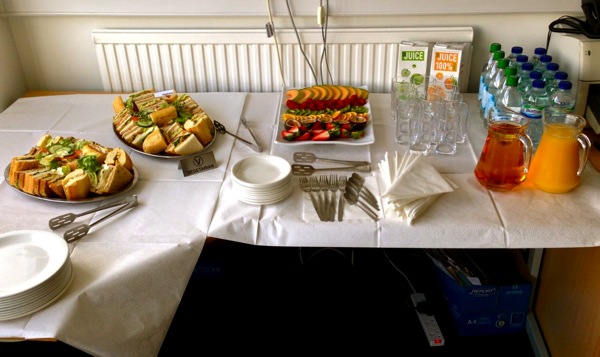
I went to a Professors and Readers lunch yesterday (and no I’m not putting any apostrophes in there). It was a small gathering in the (acting) Dean’s office in order to meet up, chat about things professorial and generally get a cross-faculty sense of who’s who and who does what.
You’d be surprised how rarely research academics in the same department – let alone the same faculty – cross paths. I think I see Tim Wall in Salford more often than I do in Birmingham, and our offices are separated by two flights of stairs. I hadn’t ever met two of the professors in the room – and I had only a passing acquaintance with the work of another.
As with so many of these sorts of things, we did a bit where we go around the table, everybody introduces themselves and talks about what they do. Unfortunately, as newest professor on the block, I was chosen to go first, so I didn’t get to take some of my cues from the other people there, which is always a helpful thing to do in terms of knowing what to say, what sort of language to use and so on.
As a result, I feel like I left some things out, spoke about some stuff that didn’t translate well outside of my discipline, or gave an incomplete picture of what it is I do. So I thought I’d have another go here.
Hi. I’m Andrew Dubber. I’m Professor of Music Industries Innovation.
I’m interested in three main things:
1) Independent music business and alternative music cultures online;
2) Innovation in independent music enterprise (which need not involve digital technologies); and
3) Music as a tool for social change.
I come at these things from a number of directions. I’m a Media Ecologist (with an interest in the concept of affordances borrowed from Cognitive Psychology, as well as the usual McLuhan stuff) in a Media Studies department with a strong Cultural Studies tradition, and I’m a member of the Centre for Media and Cultural Research. I’m also both a Radio Studies and Jazz Studies academic, though I should not be mistaken for a musicologist.
I have a non-traditional academic background, coming from fifteen years in the radio industry and having run an independent record label. I moved into teaching and then later research and a lot of my work is practice-based and experimental. I like to find things out by making and doing things, and I also focus on Knowledge Transfer / Knowledge Exchange activities, ensuring that the research I do has a useful and practical dimension to it that can be of benefit outside of academia – for instance, working with organisations and music businesses to help them do what they do better. And of course, my research informs the teaching I do as well.
I’ve written books on the music industries, I’ve just finished one about radio, and I am currently in the early planning stages of a book about independent jazz record labels.
I run an MA in Music Industries and an MA in Music Radio – both with attendance and by distance learning pathways – and I also supervise a handful of PhD students on a number of related subjects.
So – that’s my job.
The other people around the table did a whole range of interesting and diverse things, and most had been doing those things far longer than I’ve been doing any of the things I do.
Because we’re a Faculty of Performance, Media and English, there’s a lot of overlap between the sorts of things we’re interested in – from the performance of electronic music that uses obsolete computer technologies, to the history of modernism; from the study of jazz on radio in the first half of the 20th century to the linguistic analysis of the English language using the entirety of the internet rather than books as a source for text.
It was like being in half a dozen simultaneous episodes of In Our Time, only with sandwiches.
Shame I don’t eat bread.
Apr 11, 2013 |
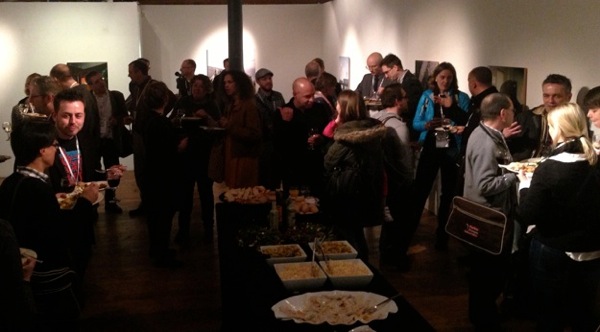
I’m in Manchester for an academic conference about jazz. It’s the final major event of Rhythm Changes, the three-year European jazz research project I’ve been working on, and it is, by all accounts, the largest academic jazz conference EVER (in Europe).
There must be literally tens of people here.
One of the great things about researching in a field like this is that you get to know most of the people pretty well and you tend to see them at pretty much every work-related event you go to. For the most part, they’re pretty cool people too.
They like jazz, for a kick off – and given that they’re predominantly PhDs and Professors in related fields, they tend to be (though this is by no means a rule) generally smart and interesting people.
I’m giving a paper on Saturday morning on the social, cultural, infrastructural, political and economic conditions that led to a very particular and very vibrant jazz/dance/hip hop crossover music scene in Auckland in the mid to late 90s. I’m also chairing a couple of panels on jazz and the internet.
So… I’m here to work. That said, you might not think so – but this is a party crowd. They’re a good bunch and some of my favourite people are among their number. They carry on until very late, they squeeze every last drop of jazz juice out of the local nightlife and they listen to (as well as make) sounds that would terrify most ordinary music consumers.
Take our evening’s opening entertainment, for instance. This was our polite dinner music before we got onto the harder stuff as the evening progressed.
Me, on the other hand, I’m back in my hotel room eating room service fish and chips, doing a bit of writing work and tweaking the project website. I just don’t have the stamina or the commitment to the cause needed to get me drinking schnapps and singing classic trumpet solos in the street at four in the morning.
At least, not since Vienna…
Apr 10, 2013 |
 I’ve had several interesting lunchtime meetings today (though only one lunch).
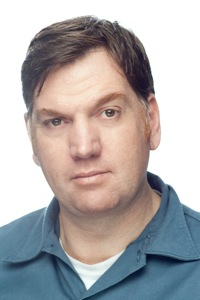
For my first meeting, I sat down with my teaching colleagues Sam Coley (left) and Andy Martindale to talk about the direction of our Music Programming undergraduate module.
It’s part of the radio degree, but it’s also something other Media students can choose as an option. It deals with two main things: specialist music shows and radio station formats.
The course explores how those two things work, how music makes meaning for people, and how putting music together in order constructs audiences and reflects scenes and cultures. It’s affectionately referred to as Mixtapes 101.
Students learn not only what makes music ‘work’ in different contexts and as a piece of media communication, but also the mechanics and techniques of format radio. Of course, these days, the applications of constructing musical texts over time applies right across media – particularly in digital media contexts.
We’re looking at putting together an online resource for this sort of thing.
Incidentally, Sam’s documentary celebrating the 30th anniversary of Bowie’s Let’s Dance is on Absolute Radio this Sunday.
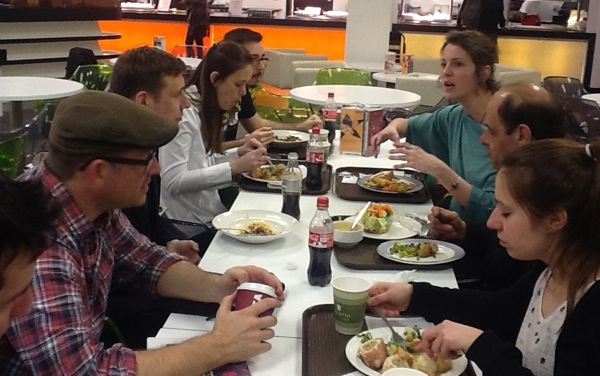
The second meeting was with a bunch of people who run a Brazilian newspaper in London called The Brazilian Post. That’s them pictured above. They “enjoyed” our university canteen food while we chatted. I, er… “wasn’t hungry”.
They want to interview me about my research and the documentary film I’m going to be making about solidarity economy in the independent music sector in Brazil. They knew a lot about Fora do Eixo, the group I’m working with out there, and had some really interesting insights into the way in which FDE have set up their own political and economic framework outside of the way that traditional economics works.
Solidarity economy is sometimes referred to as “friendly capitalism” and one of the newspaper people called it “the most important movement in the world today”. So I might be onto something…
One of the University marketing people and someone from international recruitment were also there. Must have said something right, because I was offered another trip over to Brazil in September to do some recruitment stuff for BCU too. Not going to say no to that.
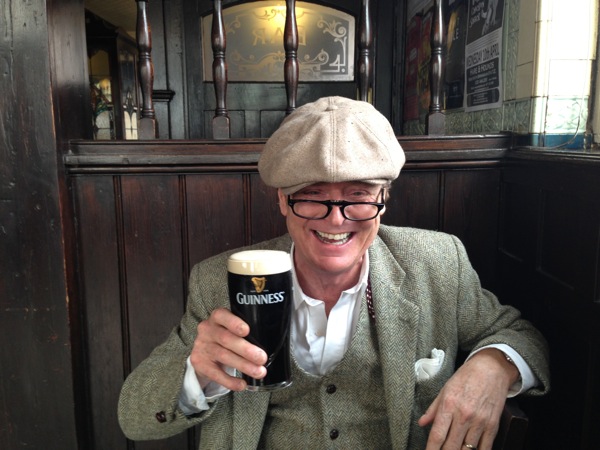
And my last meeting was with my friend Brian, who’s the sax player in UB40. We had a whole bunch of stuff to talk about, new and interesting projects on the horizon – and, finally, actual lunch too. It was great to catch up. We used to DJ together pretty much every week for a while there, but haven’t seen each other for a few months.
He’s asked me to be on a non-executive board he’s putting together for his latest project, and I’ve asked him to be involved in a new online venture I’m helping out with – and we worked out some interesting ways of getting students involved (and paid) along the way.
So… I may have started at noon and ended at 4pm, but I managed to get some really good work done over that extended lunch break. More meetings should happen that way.
That’s an orange juice Brian’s holding in that picture, by the way. We were all business.
Mar 11, 2013 |
I’m back – suitably rested and refreshed. I’m in Birmingham and I start back at work today. Things may resume. I’m realistic enough not to aim for normality, but I’m ready for a bit of routine again. As of today, my research sabbatical is over. I’ve been away from work, and I’ve been travelling a great deal. And while I may have a bit of a tan (see above) – I have certainly been working. More on that in a second.
My first big news is that since I last wrote, I have become a professor. My new job title is Professor of Music Industry Innovation. Obviously that includes a lot of stuff about digital technology in the music industries – but also innovation around enterprise, independent business and alternative culture, and music as a tool for social change. And then there’s all that radio stuff I tend to go on about.
Of course, I couldn’t fit all of that on one business card, so Music Industry Innovation has had to act as shorthand for what it is I study.
In terms of what I’ve been doing, well it’s been a little while, so let me bring you up to speed.
Over the past few months I’ve finished my book Radio in the Digital Age and packed it off to the editor; completed a journal article about European jazz agencies and the internet that’s been accepted for publication; an article about New Zealand jazz for the forthcoming AudioCulture website; and I’ve made a start on a piece for a Latin American journal about radio.
I have a couple of academic conferences coming up, and I’m going to be presenting a paper about Bandcamp and independent music discovery at Severn Pop at the University of Bristol on the 25th of this month. In April, it’s the big conference that brings to a close the wonderful Rhythm Changes European Jazz research project I’ve been involved with for the past few years.
But all that’s just the tip of the iceberg. 2013 looks to be an interesting one, to say the least.
I’ve been in some pre-production meetings for a documentary film I’m going to be making with the guys from Blue Hippo Media, who made the excellent Last Shop Standing. My documentary is about the network of independent music collectives in Brazil – Fora do Eixo.
I’ve been studying them for a couple of years now, and there’s lots more to be done. By connecting live music venues, artists and festivals as well as labels and studios around the country, the collectives have developed a separate economy from that of the mainstream music industry… to the point where they now actually have their own currency. Really. It’s a fascinating story.
More on that on my Brazil research blog.
I was on TV in New Zealand talking about music business and music culture in the digital age. The show’s called Media 3 – and you can watch that here (skip to 18m 30 for my bit).
I’ve also been working on a couple of e-books. Music in the Digital Age has been a work in progress for some time now, but it’s already available for download if you’re interested.
The other book is called The 360 Deal – and all going well, it should be ready and available by the end of the week.
I’ve been keeping it pretty well under wraps just so I could get a head start on it before launching it. It’s essentially an edited collection of very short essays by people in the music industries. I’ve asked a whole bunch of really smart and interesting music people to give, in around 360 words, the best piece of advice they could possibly give someone just starting out on their music career.
The range of advice is astonishing, and the calibre of contributors is quite humbling. Like Music in the Digital Age, The 360 Deal will grow as time goes on. My aim is to end up with 360 pieces of advice by 360 people in 360 words. The book is going to be available for sale for $3.60 (or more, if you prefer) with all proceeds going to Music Basti – a charity in India that brings music workshops to homes for children affected by extreme poverty.
It’s a really good cause – and the book is astonishingly great (I can say this, because I really only compiled it – other people have done the writing). It’s turning out to be an incredible collection of music industry wisdom, practical and pragmatic advice, and completely inspirational writing. I can’t wait to show it to you. With any luck you should be able to see that by Friday.
And finally, I guess, I’ve been having conversations with some really fascinating people in the music and tech sectors and there are some interesting projects in the works. All I can really say about that for now is ‘watch this space’…
It was lovely to be away – but it’s also nice to be back.
Oct 12, 2012 |

Sometimes the cool and interesting things that my colleagues do at work spill over and I get some of the benefits. As a result, I was in Budapest last week for the European project that Paul Long & Jez Collins run out of our research office.
It’s about innovation in popular music heritage and its impact on vocational training – which basically means a bunch of stuff about celebrating the musical history of a place (as Liverpool does with the Beatles, Chicago does with Blues music, etc.), and then understanding how people do that in really interesting and surprising ways, figuring out how they get (or make) jobs in that, and then translating that into what we teach people who want to do those sorts of jobs.
The project connects with different types of educators, music industry people and students in a number of different countries – from Bulgaria to Ireland, Finland to the Germany, UK to the Netherlands. All of them interested, for one reason or another, in: 1) popular music heritage; 2) innovation; 3) vocational training for the media and music industries.
(more…)
Sep 23, 2012 |
Tomorrow is the first teaching day of the academic year, and for the first time ever, I only have postgraduate students.
It’ll be the first time since I started teaching at universities (about this time back in 1999) that my primary focus hasn’t been on BA students. While there is a great deal of satisfaction to be had teaching at that level – I’m really looking forward to a semester largely free of undergrads.
Supervising Masters and PhD students can kind of spoil you. Your expectations for independent learning, depth of critical thinking and dedication to research are set pretty high. The role is more that of a coach than an instructor. And while that’s no less challenging, it does make a significant difference to the way in which you approach the task.
But a change is as good as a rest, as they say, so this already feels a bit like a holiday from what has been a massive part of my job for the past 13 years. And tomorrow – that ‘holiday’ starts with the first class for my new MA Music Industries students.
That doesn’t mean, however, that I’ll be taking it easy for the rest of this calendar year. Quite the opposite. I have a book deadline.
(more…)

