Select Page

Claybourne in print

An academic working in the UK was in touch several years back because she was planning to include an analysis of a sci-fi / thriller / soap opera radio series I made in the late 90s in her PhD. She was focusing on developments in radio drama over time, and was particularly interested in the dramatic representations of indigenous cultures in different places. Our series, being based in New Zealand, had a particular interest in representing Māori culture, language and voices in the context of a very (at the time) contemporary story.

She contacted me today to let me know that she had gone on to publish a book about radio drama more broadly, particularly in the context of our present age of ubiquitous podcast audio narratives.

Despite the age of the series (well over 20 years old), her book kindly gives Claybourne a very generous amount of space in a chapter that’s largely about the groundbreaking podcast ‘Serial’.

She also quotes my writing liberally throughout the book, which is a forgotten pleasure from my professional academic days.

Here’s the relevant section.

Claybourne

The evidence suggests that, as Serial did not emerge out of a vacuum, there is an ‘almost inevitability to the structure and format’ of Serial and the post-Serial (Hancock and McMurtry 2018: 85). I would argue that this ‘almost inevitability’ is maninfest in pre-digital radio drams like Claybourne, indeed down to this very notion of the prominence of seriality. I highlight Claybourne here because of its notions of accessibility and seeking out listeners who might not usually be reached by radio drama. Claybourne ran for 96 episodes on New Zealand radio station Newstalk ZB in 1998. Written by and starring Jim McLarty and William Davis and produced by Andrew Dubber and Belinda Todd, Claybourne was genrecrossing, a sci-fi/thriller soap opera broadcast four days a week in extremely short chunks (around five minutes), a highly addictive format. Set in New Zealand and with many Māori characters and a clear focus on Māori culture, it was, in Dubber’s words ‘deliberately and proudly New Zealand in its language, humour and accent. It was consciously cinematic in production and sound design’ (2006). Furthermore, the serial drama was scheduled just after the 3:00 p.m. news:

we imagined an audience member that would turn the radio on in the car as they waited outside for the school pickup, hear the next instalment, then switch off again (or at least turn the radio down) as the kids got in the car.
(Dubber 2017)

Newstalk ZB was also characterized as having an audience skewed towards ‘white, conservative, middle class, male’ listeners (Dubber 2017)

The listener’s ‘way in’ was Thompson, an American employed by Koestlers, a mysterious corporation. On holiday in New Zealand, Thompson is called to investigate a crisis in Claybourne, a town in the remote part of the north island. Thompson quickly becomes embroiled in the local community interacting with Māori kaumātua (elected tribal leader) Mata. With a televisual emphasis on ‘storyarcs within story arcs’ (Dubber 2006), Claybourne was almost literally too large for its palette, ending after one season when two had been planned. It was resurrected in 2006 as a podcast by the Podcast Network, became one of the most popular spoken word programmes in the history of mp3.com (Hopkinson 2007) and subsequently became available on Bandcamp and Archive.org.

Claybourne had many of the elements that made Serial irresistable:

  • The strong pull of seriality and episodes available in digestible chunks
  • A seemingly infinite series of cliffhangers
  • Centripetal storytelling
  • Bookending litany
  • Compelling characters
  • Accessibility.

Although set in what some listeners might consider an alien culture, it was presented in an accessible way (i.e. Thompson was initiated into Māori traditions and exposed to pervasive elements of Kiwi culture like Vegemite). Dubber describes this as:

The relationship between Mata and Thompson meant that audiences were generally situated somewhere in between. The idea was that any pakeha [white person] who lives in New Zealand is less ignorant of Māori culture than Thompson. As a kaumātua, very few Māori know as much about the culture as Mata.
(Dubber 2017)

The major difference between Serial and Claybourne was in the way the story was told. Claybourne used an omniscient voice. Serial had the noughties idea of the probing, self-reflexive reporter, a sort of true crime/Gothic protagonist. Another important difference was the way in which Claybourne was distributed: by traditional means, on terrestrial radio. In subsequent years, then, it has taken on an afterlife probably not envisaged by its creators, and it’s a testament to the series’ quality that a drama produced by and for a New Zealand audience could be globally engrossing. One thing that Claybourne had that Serial didn’t was that it (potentially) reached people who aren’t in the white, middle class, affluent, educated demographic. This has ramifications for audio drama reaching audiences whom it has traditionally failed to reach; as we have seen, the audiences for BBC Radio 4 have tended to be white, educated and middle class, which is a similar demographic to those who listen to public radio in the United States.

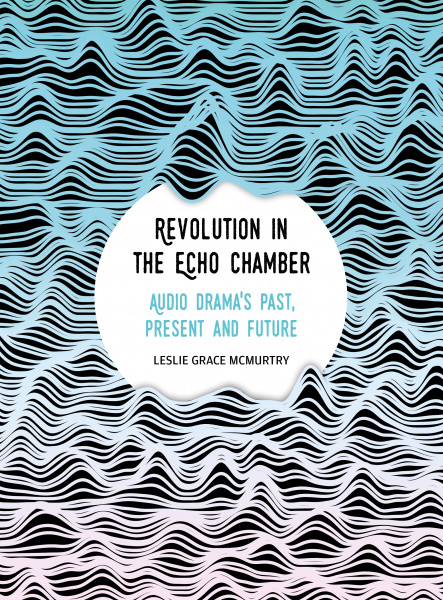
Excerpt from:
Revolution in the Echo Chamber: Audio Drama’s Past, Present and Future by Leslie Grace McMurtry, Intellect Books, 2019 | GBP 79.00 | 295 pages

Bit of a thing for the birds

As part of my “get out and see a bit of Auckland with outsider’s eyes” mission, I popped along to the Auckland War Memorial Museum yesterday afternoon. There are all sorts of exhibits across multiple floors – everything from Chinese tapestries to Spitfire aircraft, giant fossils to 19th century New Zealand classroom replicas, but as usual, I was drawn to the native birds.

It seems to be a thing I do. On a recent road trip in the States, I was endlessly fascinated by the various birds I saw – particularly the birds of prey: the hawks, eagles and falcons. I saw a woodpecker too – that was kind of cool.

In Britain, I’m always excited to see a peregrine or a sparrowhawk (though never quite sure – nor particularly care – which is which) and I love seeing the red kites over the motorway whenever I head down to London from Birmingham.

There’s no shortage of birds to be amazed by here in New Zealand too: tuis, fantails, the kereru and the wonderful pukeko. I should just admit to myself that I have a bit of a thing about birds. Not sure what it is – a fascination, I guess – but it’s definitely a thing.

(more…)

So… how old are you now, Dubber?

How old are you now, Dubber?

Today is my birthday. This time 8 years ago to the day, I was leaving Auckland airport with my family. We were heading to the UK to live and we had no idea what was waiting for us when we got there.

As it happens, I’m making that same journey today — and I’m really looking forward to being home.

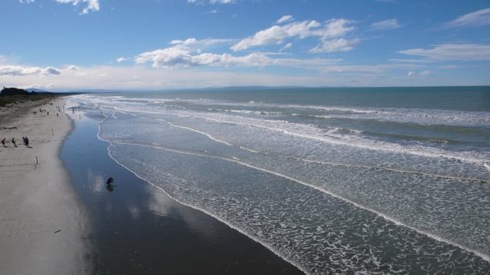
I’ve really enjoyed my (all too brief) time back in New Zealand, made some really great new friends and met up with some old ones. I hung out with family, and I got to see some parts of the country I’ve not really explored before (including parts of Christchurch).

Not going to make a big deal of the birthday. Might have a glass of wine and a relaxing weekend, but I have more important things to think about. The new academic year starts for me on Monday, I’ve got a couple of book deadlines looming, and I have a lot more travel to do between now and the end of the year.

But for now, I think I’m just going to read a book, enjoy the flight – and see you back in Birmingham.

Ka kite!

Going Global in New Zealand

L1290457

I’ve been back in New Zealand this past week speaking at an event called Going Global. It’s been great to spend time in Auckland, Wellington and Christchurch with some really lovely people, talk about music online, see a bunch of bands and, where possible, catch up with some friends.

A bit of a whirlwind tour, unfortunately, but I have managed to do some of the things on my must-do list – including spending some time (and money) at Conch Records, seeing a bit of each city (and, in the case of Christchurch, some of the incredible scenery of the surrounding areas), and doing some of the radio and press interviews, I said I’d do while I’m here.

I absolutely, positively loved Wellington – and it more than lived up to its windy reputation (in fact, we were lucky to get out, as they closed the airport not long after we left due to extreme weather), and going to Auckland felt like coming home – even more than I thought it would. Christchurch has been bittersweet of course. It’s lovely, but it’s heartbreaking to see so much devastation.

I don’t know Christchurch nearly as well as I’d like to – and now I feel like there’s a large part of it I’ve missed out on and will never get a chance to experience. But the overwhelming feeling here seems to be one of optimism and normality. Absolutely loved the shopping mall made of shipping containers, and hope that stays around as a landmark and a testament to the people here. Inspiring stuff.

(more…)

Support BOY for Waitangi Day

As you’ll no doubt already know, it’s traditional to give generous gifts to New Zealanders on Waitangi Day*.

New Zealander Taika Waititi is trying to get his film BOY screened in the United States. February 6th is Waitangi Day. I’ve just put those two things together and made a connection.

BOY is a fantastic film, and it would be great to know that it was getting the international recognition it deserved. For a small (or large) donation, you can help make that happen. There are some great incentives as well. Here’s a link to the Kickstarter project.

And happy Waitangi Day.

*It’s not traditional to give gifts to anyone on Waitangi Day, but let’s pretend.

Playing Musical Chairs for over a decade

About ten years ago – maybe a little more – I made some programmes for a Radio New Zealand series called Musical Chairs. Each programme focuses on a person who is very important in the world of New Zealand music. Usually it’s a musician, of course – but for me – one radio DJ had to feature.

Recently, thanks to the help of someone in the organisation, I came into possession of archived CD copies of those programmes, for which I am incredibly grateful. It’s a real pleasure for me to be able to hear these after such a long time. And until such time as someone expressly tells me in writing that I shouldn’t – I’ve got them here (via Mixcloud) for you to listen to as well.

Each programme is just short of 30 minutes, and I’m really pleased with them. I’m okay with my writing, my editing and my production (even, at times, my presentation) – but moreover – I’m really pleased to have captured a moment in time as well as a potted history of some of my favourite kiwi music people.

I’m going to be back in New Zealand in July 2012. Wouldn’t it be great to get the chance to revisit these stories, meet with these people, play them the programmes and then maybe get them to talk about the intervening years? That’d be an interesting exercise – for me, certainly.

(more…)