Select Page

Claybourne in print

An academic working in the UK was in touch several years back because she was planning to include an analysis of a sci-fi / thriller / soap opera radio series I made in the late 90s in her PhD. She was focusing on developments in radio drama over time, and was particularly interested in the dramatic representations of indigenous cultures in different places. Our series, being based in New Zealand, had a particular interest in representing Māori culture, language and voices in the context of a very (at the time) contemporary story.

She contacted me today to let me know that she had gone on to publish a book about radio drama more broadly, particularly in the context of our present age of ubiquitous podcast audio narratives.

Despite the age of the series (well over 20 years old), her book kindly gives Claybourne a very generous amount of space in a chapter that’s largely about the groundbreaking podcast ‘Serial’.

She also quotes my writing liberally throughout the book, which is a forgotten pleasure from my professional academic days.

Here’s the relevant section.

Claybourne

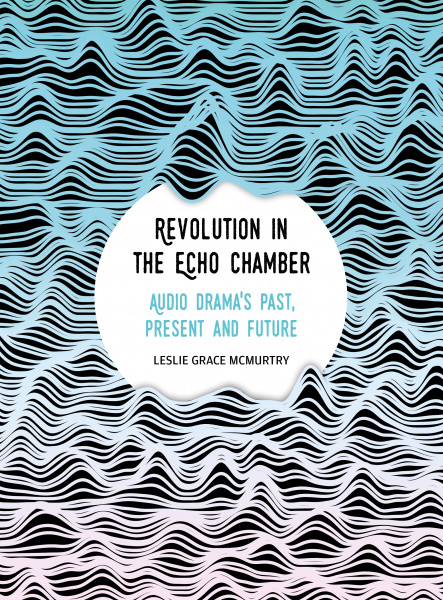
The evidence suggests that, as Serial did not emerge out of a vacuum, there is an ‘almost inevitability to the structure and format’ of Serial and the post-Serial (Hancock and McMurtry 2018: 85). I would argue that this ‘almost inevitability’ is maninfest in pre-digital radio drams like Claybourne, indeed down to this very notion of the prominence of seriality. I highlight Claybourne here because of its notions of accessibility and seeking out listeners who might not usually be reached by radio drama. Claybourne ran for 96 episodes on New Zealand radio station Newstalk ZB in 1998. Written by and starring Jim McLarty and William Davis and produced by Andrew Dubber and Belinda Todd, Claybourne was genrecrossing, a sci-fi/thriller soap opera broadcast four days a week in extremely short chunks (around five minutes), a highly addictive format. Set in New Zealand and with many Māori characters and a clear focus on Māori culture, it was, in Dubber’s words ‘deliberately and proudly New Zealand in its language, humour and accent. It was consciously cinematic in production and sound design’ (2006). Furthermore, the serial drama was scheduled just after the 3:00 p.m. news:

we imagined an audience member that would turn the radio on in the car as they waited outside for the school pickup, hear the next instalment, then switch off again (or at least turn the radio down) as the kids got in the car.
(Dubber 2017)

Newstalk ZB was also characterized as having an audience skewed towards ‘white, conservative, middle class, male’ listeners (Dubber 2017)

The listener’s ‘way in’ was Thompson, an American employed by Koestlers, a mysterious corporation. On holiday in New Zealand, Thompson is called to investigate a crisis in Claybourne, a town in the remote part of the north island. Thompson quickly becomes embroiled in the local community interacting with Māori kaumātua (elected tribal leader) Mata. With a televisual emphasis on ‘storyarcs within story arcs’ (Dubber 2006), Claybourne was almost literally too large for its palette, ending after one season when two had been planned. It was resurrected in 2006 as a podcast by the Podcast Network, became one of the most popular spoken word programmes in the history of mp3.com (Hopkinson 2007) and subsequently became available on Bandcamp and Archive.org.

Claybourne had many of the elements that made Serial irresistable:

  • The strong pull of seriality and episodes available in digestible chunks
  • A seemingly infinite series of cliffhangers
  • Centripetal storytelling
  • Bookending litany
  • Compelling characters
  • Accessibility.

Although set in what some listeners might consider an alien culture, it was presented in an accessible way (i.e. Thompson was initiated into Māori traditions and exposed to pervasive elements of Kiwi culture like Vegemite). Dubber describes this as:

The relationship between Mata and Thompson meant that audiences were generally situated somewhere in between. The idea was that any pakeha [white person] who lives in New Zealand is less ignorant of Māori culture than Thompson. As a kaumātua, very few Māori know as much about the culture as Mata.
(Dubber 2017)

The major difference between Serial and Claybourne was in the way the story was told. Claybourne used an omniscient voice. Serial had the noughties idea of the probing, self-reflexive reporter, a sort of true crime/Gothic protagonist. Another important difference was the way in which Claybourne was distributed: by traditional means, on terrestrial radio. In subsequent years, then, it has taken on an afterlife probably not envisaged by its creators, and it’s a testament to the series’ quality that a drama produced by and for a New Zealand audience could be globally engrossing. One thing that Claybourne had that Serial didn’t was that it (potentially) reached people who aren’t in the white, middle class, affluent, educated demographic. This has ramifications for audio drama reaching audiences whom it has traditionally failed to reach; as we have seen, the audiences for BBC Radio 4 have tended to be white, educated and middle class, which is a similar demographic to those who listen to public radio in the United States.

Excerpt from:
Revolution in the Echo Chamber: Audio Drama’s Past, Present and Future by Leslie Grace McMurtry, Intellect Books, 2019 | GBP 79.00 | 295 pages
Keeping it Reel

So I’ve been thinking and writing a lot about the media formats on which we compile and listen to music – tapes, CDs, iTunes playlists and so on – and how the various affordances of each of those formats shape the nature of the mix.

Spotify, for instance, allows us to drag and drop songs to a playlist. As a result, I’ve created Spotify mixes with over 1000 songs on them. And for some playlists, there are always more songs to be added. By way of contrast, the limitations of real-time recording and 90-minute cassette durations split over two rigidly 45 minute sides create different types of mixes. But the limited tape real estate problem / opportunity is not the only difference between the analogue and digital formats presented here.

For instance, the pause button on a tape deck allows us to choose, more or less, the length of the gaps between the songs. And that matters. I’ve written quite a bit recently about the silence between and before songs too. It’s one of the interesting cul de sacs this particular line of enquiry has taken me down recently.

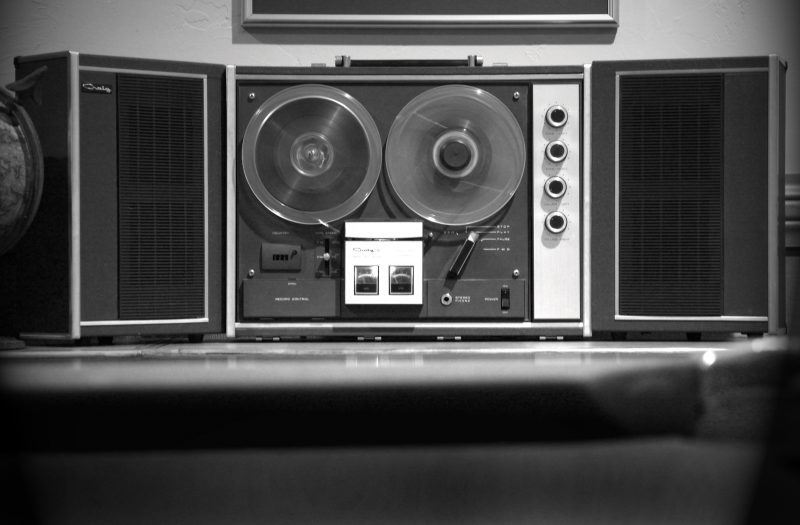
And of course the recording medium can dictate when, where and how those selections of music can be listened to. A reel-to-reel tape tends not to be played in the car or at the beach, but rather in a particular kind of setting. There’s a reason Uma Thurman’s Mia Wallace has one in her home in Pulp Fiction. She could probably just as easily have played Urge Overkill’s ‘Girl You’ll Be A Woman Soon’ on some other device, but that particular machine carries meaning – and it’s a meaning that sits within that particular architectural, socio-economic and decorative context as much as it has anything to do with sonic reproduction.

I was at a party not so long ago, and the host had in his living room a lovely refurbished mid-70s Sony reel to reel machine on which he had a tape consisting of songs all recorded around the time of the production of the device on which they were being played. Anything much newer, he figured, would seem – or even possibly sound – wrong. Anything much older would seem to overtly draw attention to the anachronism of the player in that context and immediately turn it into a museum piece.

As far as I know, this is the only tape he plays, though I could just be making that bit up.

It appeared to have something to do with the idea of ‘authenticity’, which has always struck me as a strange concept when it comes to recorded music. You’ll be aware of the Jack Whites of the world who are very interested in this elusive quality of authenticity and how it not only connects to but positively dwells within particular music formats. They’re excited about the idea that ‘real’ music is played on particular types of instruments, and that certain recording media and methodologies capture the ‘real’ sound and honest intention of the artist.

I’m not especially convinced by such arguments. Apart from anything else, one of the things I like most about records is that they do not sound authentic. I’ve spent a lot of time in recording studios, and I’m incredibly interested in the things that quite deliberately get in the way of the performing artist communicating, unfiltered, with an audience. There are many, many records on which those additions, filters and processes are my favourite attributes of the resulting music.

Quite often, the artist’s original intention is not as good as the finished product ends up being, and even more often, the artist is not able to single-handedly express that intention – and that’s what those other gadgets, devices and trained professionals are for.

I’ve been criticised for not being a ‘proper music fan’ for not fetishising vinyl more than I already do (and to be clear – I am an avid vinyl collector and regular purchaser – I just don’t happen to think it has magical properties), and even more so for preferring recorded music to live performances for the most part.

One of the things I like most about recorded music is the skill, effort and technological wonder that goes into presenting the artist’s intentions in some repeatable, possibly even unperformable version contained within some artefactual form that I can listen to in a context of my choosing with perhaps a beverage from my own kitchen.

I don’t happen to believe the experience of music is enhanced by standing in the rain with people you don’t much like.

Vinyl records (just like tape decks, CD players or iPhones) are, by definition, layers of mediation between the performer and the audience. They’ll always contribute their own characteristics to the finished sound and experience of the music. And that’s how it’s supposed to be.

There is, of course, such a thing as audio fidelity and it’s something I’m very much in favour of. I’m also in favour of the some of the lovely characteristics of vinyl records that get in the way of transparency and fidelity, and instead draw your attention to the fact that is a record that you are listening to and not just ‘some music’. But these things have nothing whatsoever to do with ‘authenticity’.

Incidentally, also along that chain of mediation I mentioned are things like the choice and placement of microphones, the EQ settings selected by the recording engineer, the unique characteristics of the recording console, outboard effects, the mastering suite, the ideas and energies of the record producer, the pressing plant, the stylus, cartridge and platter of the listener’s turntable, their amplifier, speakers, room dimensions and characteristics… and so on.

What you are listening to is essentially soup: Artist’s intention minestrone.

All of this goes to make a complete mockery of the very idea of authenticity of a music recording.

And such an idea deserves to be mocked. How is a blues musician capable of greater authenticity than a K-Pop artist – unless, let’s say, both are having an attempt at Buddy Guy’s The Sky Is Crying – and, so like in which case, as both can only ever be approximations or reinterpretations, perhaps the least mimetic version contributes its own particular brand of authenticity, yeah?

How is the 20th century technology of vinyl more authentic than the 20th century technology of compact discs? Or vice versa? Is an mp3 more ‘real’ than a stream? An ‘original’ song that borrows from an uncredited traditional source more ‘true’ than a cover version of that same song?

I mean, there may be other things at work here – personal preference and cultural history certainly being among them – but, let’s keep it real: authenticity is absent.

Which is not to say that music cannot be honest, that these formats are no different from each other or even that the difference doesn’t matter. Certainly none are entirely transparent and nor would that be desirable. But to suggest that one is inherently better than another misses the far more interesting question: better at what?

So anyway, for what it’s worth, I haven’t yet encountered a music recording format I haven’t liked. DAT tapes came close, but they had their own charm and I have a box of them under the bed and a player in the shed. Reel to reel machines are among my favourite music recording and playback technologies. I have a special place in my heart for the grace and elegance of a well-tuned Studer Revox A77 or the workhorsey braun of an Otari MX5050-ii with a fresh reel of Ampex 456 threaded and ready to go.

But all of these would struggle with absolutely everything about my Ultimate Road Trip Singalong Mix which, at last inspection, was a good 84 hours long and only makes any sense at all when played in Random mode as you set off – in, it should be pointed out, a car rather than, say, a luxury inner-city apartment interior with cream leather sofas and small plastic envelopes of powdered heroin on the coffee table.

To be clear, I am referring here to the Pulp Fiction scene, and not the party I went to. That one had brown furniture.


Incidentally, I’ve started an email list for people who want to be kept more up to date with what’s going on with the book I’m writing about this sort of thing: playlists, mixtapes and other collections of music put in some sort of order for whatever reason. It’s called The Right Next Song. I won’t bother you any more than once a week at the best of times, but you’ll act as my sounding board, I’ll ask the odd interesting question, and you’ll get to read bits of it before anyone else and tell me where I’m going wrong.

Sound like fun?


The right next song

For the past few months, on and off – more off than on, but with at least some degree of consistency – I’ve been working on my next book. So far, it’s pretty much just a collection of notes, thoughts, a few interviews with some interesting people and a draft chapter structure I’m reasonably pleased with. Nothing to write home about, though here I am – writing home.

That said, I think it’s starting to come into focus to the extent I can really start talking about it as a real thing. Yes, it’s still a long way off, and sure, saying “I’m writing a book” is not really the same thing as writing a book – but I feel like it’s starting to take some sort of shape in my head, which is, I expect, the first of the places it needs to start doing that.

So, but the reason I mention it is that I’d like it to be a well-informed and well-researched piece of work that brings together thoughts other than just my own. I’m reading a lot around the subject and asking some experts for their ideas and experiences, but it feels like it’s time to cast the net a bit wider for input – and this is exactly the sort of thing that I suspect lots of people have deeply held opinions and thoughts floating around to contribute – and probably some advice for further reading, data or analysis.

The book’s essentially a sociology of music curation. It’s about how we make meaning from music by putting it in an order.

By that I mean that music doesn’t stand alone. We connect it to other music. We play it in an order, and we choose that order for a reason. Songs have their own meanings in and of themselves of course, but they’re also used to communicate, to create a narrative or to establish a mood by means of their position in a sequence and their placement in a context. We use collections of songs to create cultural objects – what essayist Geoffrey O’Brien called ‘the single most widely practiced American art form’ (and we can problematise the ‘American-ness’ of that as we go along).

I’m talking about Mixtapes. Playlists. Compilations.

The study of playlists

When I’ve told close friends that I’ve been searching a long time for a new book topic, and that this is what I’ve finally arrived at, their collective reactions could reasonably be summed up “Well, duh…”.

Fair call. There really couldn’t be a more obvious thing for me to be working on.

When I worked as a professor at a university in the UK, my ‘Music Programming for Radio’ undergrad class was sometimes referred to as Mixtapes 101. It was about how music connects to other music, how to select music for an audience or an environment, and how to both construct and read playlists as pieces of communication.

An important part of the homework was researching and creating mixtapes for loved ones and fellow classmates, making specialist radio playlists, soundtracks for imaginary films, compiling in-store music for fashion retail, bars and restaurants, and incidental music for renovation shows and gardening programmes on TV. Students made mixtapes that explored musical subgenres, musicological features, instrumentation and arrangement, political and social messages, complex moods and feelings, musical eras and scenes.

The other important part of the homework was listening to and analysing those compilations.

But to say that I’ve been teaching music radio classes is not my way of presenting credentials for writing this book. That’s not where this book comes from, and – more to the point – this is not that kind of book. This is not a book that will set you homework, though hopefully it will start some interesting conversations.

But like the university course, it’s largely an outcome of the immersion in music selection and curation that’s been going on throughout my life: whether it’s making compilation tapes for myself; crafting a mixtape for a friend (or, at one time or another, a prospective romantic interest); or selecting a day’s worth of automatically programmed music on Spotify that I can work to…

Whether it’s presenting a specialist music radio show, producing records for my label and agonising over the tracklisting, curating performances for a festival of music and technology, or programming an entire radio station’s 24/7 musical output…

Whether it’s DJ-ing at festivals, a wedding in Hamburg, support for the likes of Quantic, Gilles Peterson and Alice Russell, DJ-ing a 70s disco night at the local community centre here in Norrmjöle in the north of Sweden, a club night residency or the weekly jazz/soul/funk themed Sunday roast dinners at my local pub when I lived in Birmingham, or playing a set alternating tracks with 808 State’s Graham Massey at 4am in a club in Goiania, Brazil…

Whether it’s choosing the order of songs for my band’s live set (we are talking a very, very long time ago now); or simply making lists of songs because I am the sort of person who likes to make lists – it seems my whole life has been constantly spent in search of the right next song.

And so that’s what the book is called: The Right Next Song.

What could it possibly be about?

The Right Next Song explores mixtapes, DJ sets, radio playlists, the track listings on CDs and records, in-store music selections, live set lists, soundtracks, compilation albums and more.

I’m interested in how a DJ, a curator or a music fan chooses the next song – and in unpicking the thought processes that are at work. I’m interested in how those sequences communicate, and how we understand them. In most instances, we don’t consider how we pick the next track – we just “know” what would work. I’m curious about how we know – and what that knowledge consists of.

Most importantly, this is a book about culture. It’s about how we take the work of different artists expressing different things, gather them together into an ordered set, and place them in a different context so as to express something else entirely. It’s about putting together and sharing a collection of music as a piece of human communication – as well as the cultures that form around that practice.

Things I’m interested in

I’m interested in how lists of music make memories. I’m interested in how long the gaps are between the tunes on a record. I’m interested in how music programmers take listeners on a journey. I’m interested in theories about using light and shade to create variety. I’m interested in artist separation rules and dayparting in music radio programming systems.

I’m interested in how tastemakers select what is ‘in’ and what is ‘out’. I’m interested in what makes a great ‘starter track’ and how we can ‘change gears’ or transition moods as the sequence progresses. I’m interested in how we communicate using lists of music – how we reveal ourselves, attract a partner or impress a colleague with a subtle mix of the familiar and unfamiliar. I’m interested in hand-written liner notes and hand-drawn covers. I’m interested in the meanings and memories that people associate with musical collections they have encountered over the years. I’m interested in the people who make a living making lists of music. I’m interested in the software that supports or challenges that professional practice.

I’m interested in road trip mixtapes, attempts (successful or otherwise) at seduction via cassette tape or CDR, as well as in breakup compilations. I’m interested in the practice of introducing a friend to a kind of music or artist they’re not familiar with – and why it matters so much. I’m interested in the radical politics of US mixtape radio. I’m interested in people who collect live set lists from their favourite bands. I’m interested in the apocryphal legend of Todd Storz and the advent of Top 40 radio. I’m interested in phenomenally influential musical tastemakers like Wolfman Jack, Mary Anne Hobbs and yes, of course, John Peel. I’m interested in algorithms and I’m interested in human curation. I’m interested in people’s ‘rules for mixtapes’ and I’m interested in music sequences that break all the rules.

I’m interested in concert programmes from classical repertoire performances. I’m interested in Freeform radio formats and I’m interested in tightly playlisted CHR. I’m interested in segues, transitions and beat-matching. I’m interested in cold starts and long fade-outs. I’m interested in the hip hop mixtape as a ‘non-album’ album. I’m interested in ‘Now That’s What I Call’ compilations and punk label samplers. And I’m interested in the sorts of stories that people have about these sorts of things.

Mixtape stories

I have loads of stories from my own life, and this is already shaping up to be a very personal book. You’ll probably learn more about me than you care to, though only ever in the service of illustrating a point. I’ll do whatever I can to veer it away from autobiography when things start to get too self-indulgent – and, thankfully, I’m constantly reminded that nearly everyone has a story to share about this stuff. Which, for me, is just perfect.

I’m interested in your stories. Your memories. Your thoughts. Your ideas about what must not be left out of a book like this. I’m interested in how sequences of music make meaning for you and how those collections of songs, when put in an order – either by you or for you – have been important to you in your life.

I want to know what, given the song you’re listening to right now, is the right next song – and why?

Feel free to leave a comment here or drop me a note.

And in the meantime, it’s my intention to use this blog as a kind of commentary on the book’s development as this year progresses. Some thoughts, some stories that will make the finished work and some that won’t. I’ll also have lots of questions you may be able to help me with – so stay tuned…

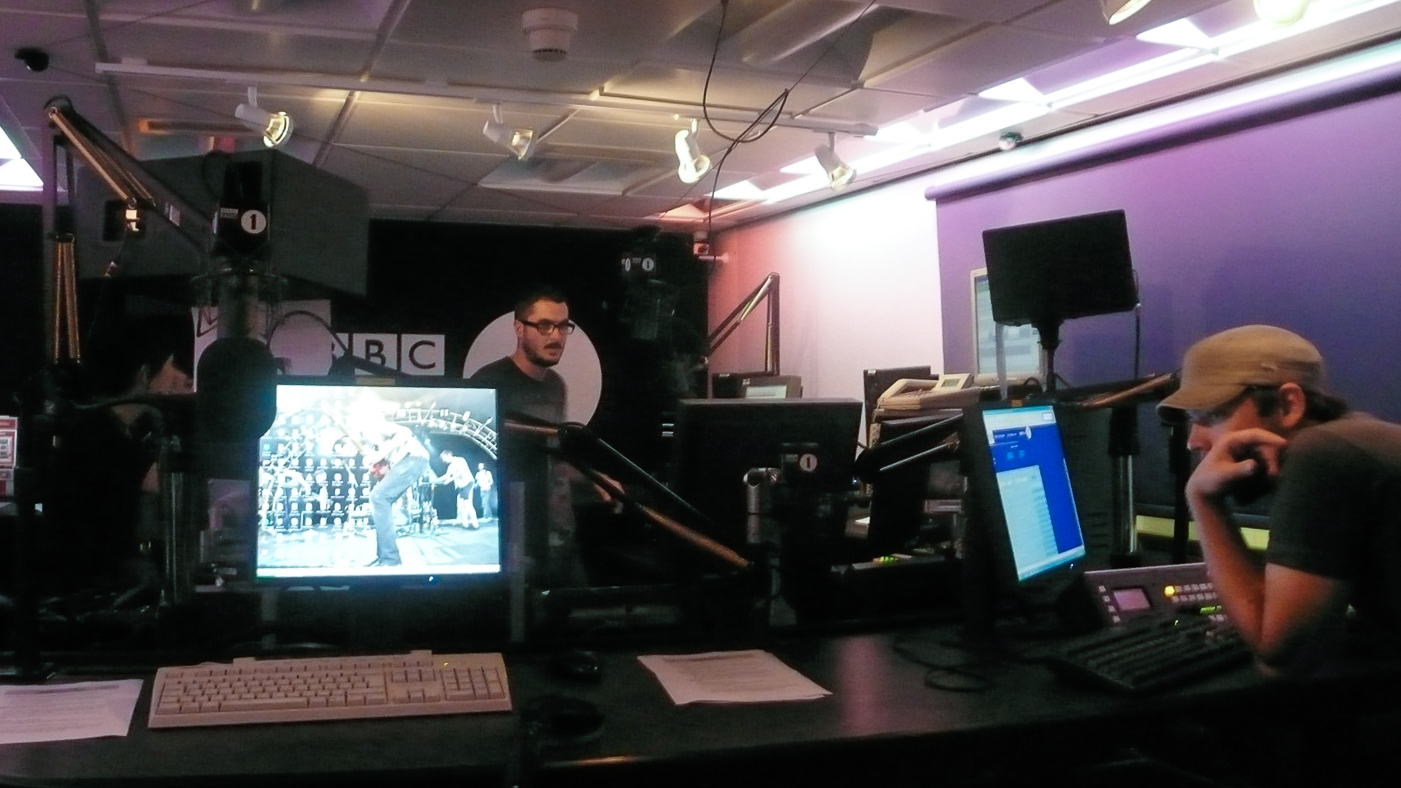
Photo: Zane Lowe on BBC Radio 1, 7th July 2008 – by Andrew Dubber

Thankfully…

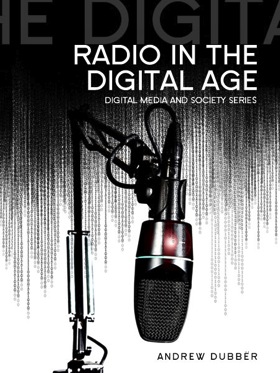
Despite being pretty much in a permanent state of overwhelming gratitude for all the incredible people and experiences in my life, I thought I’d stop and commemorate the whole Thanksgiving thing that my American friends are about to dive into by posting the Acknowledgements from my Radio in the Digital Age book.

Here’s what I wrote. It’s probably about you:


In a way, I’ve been writing this book for over 20 years. It’s only the typing of it that has happened in the last 12 months. Over those two decades, many people have shaped my thoughts about radio, about the meanings of shifts in technological environments and about how to codify and explain my ideas about them. To single those people out here and explain why each was so important to me would cause the Acknowledgments to exceed the length of the book. Some of those people provided mentorship (whether they knew it or not), others ideas, practical assistance and expert advice. Others have written the words that I quote and refer to in this work, without which I would not be able to think what I think. More have provided the incredibly professional services that have turned my rough manuscript into the polished and finished work you hold in your hands. Still more provided me with the support, indulgence and space I needed to finish this book to a deadline that happened to coincide with some rather significant events in my life.

I’m incredibly grateful to them all, especially to those I’m proud to call my friends and my family, who didn’t just make this book possible, but also gave me the best reasons to write it – and even better ones to finish it.

Naturally, I want to thank everyone – but I’ll make sure to do so in person. Repeatedly.

However, there is one person I can’t thank in person, and so wish to do so publicly. This book is dedicated to the late John Haynes, who not only introduced me to the phenomenon of the ‘thinking radio practitioner’, but also provided me with the best example I have ever encountered. John took me under his wing at the beginning of my career and showed me that radio, technology, culture and the human mind were all things worthy of close and thoughtful examination.

He planted all of the seeds. This book is just one season’s crop.

Finishing touches on the radio book

DUBBER 1For the past few weeks, I’ve been working with a copy editor by the name of Manuela on preparing my Radio in the Digital Age book for print.

She’s been brilliant – making suggestions, corrections and alterations – and even adding additional knowledge and nuance in some areas that allowed me to expand some sections and go a little deeper.

I like to think I’m reasonably competent when it comes to spelling, grammar and punctuation. In fact, I’m a complete amateur. Manuela’s an artist when it comes to sentence structure and a scientist when it comes to understanding how the language really works.

I had no idea how deep that sort of expertise can go.

All in all, it’s been a really positive experience, conducted entirely via email and in comments on Word documents. We’ve never actually met.

Today I sent off the last bit of information she needed: the page numbers of a published book chapter in Spanish for which I only had a draft pre-translation English copy. Now that we have that, the book is complete and it’s off to press.

It’s great to be able to cross such a major project off my list. There is now nothing more I can do to change or improve it. I’ll simply have to wait and see it when it’s ready.

I’ve put out ebooks before, of course, and I’ve co-authored texts and contributed chapters to books that have been published by Sage, Longman and Routledge – but this is my first sole-authored, traditionally published book – so I’m quite excited about that aspect of it.

All going according to plan, Radio in the Digital Age will be published by Polity in November.

I have several other book projects in the pipeline. It’s been an interesting process going through this one from start to finish, and there are certainly some things I’ll do differently next time. But now that it’s done – it definitely feels like something I can do again.

So that’s encouraging.

Here’s some more about my books, if you’re interested.