
About
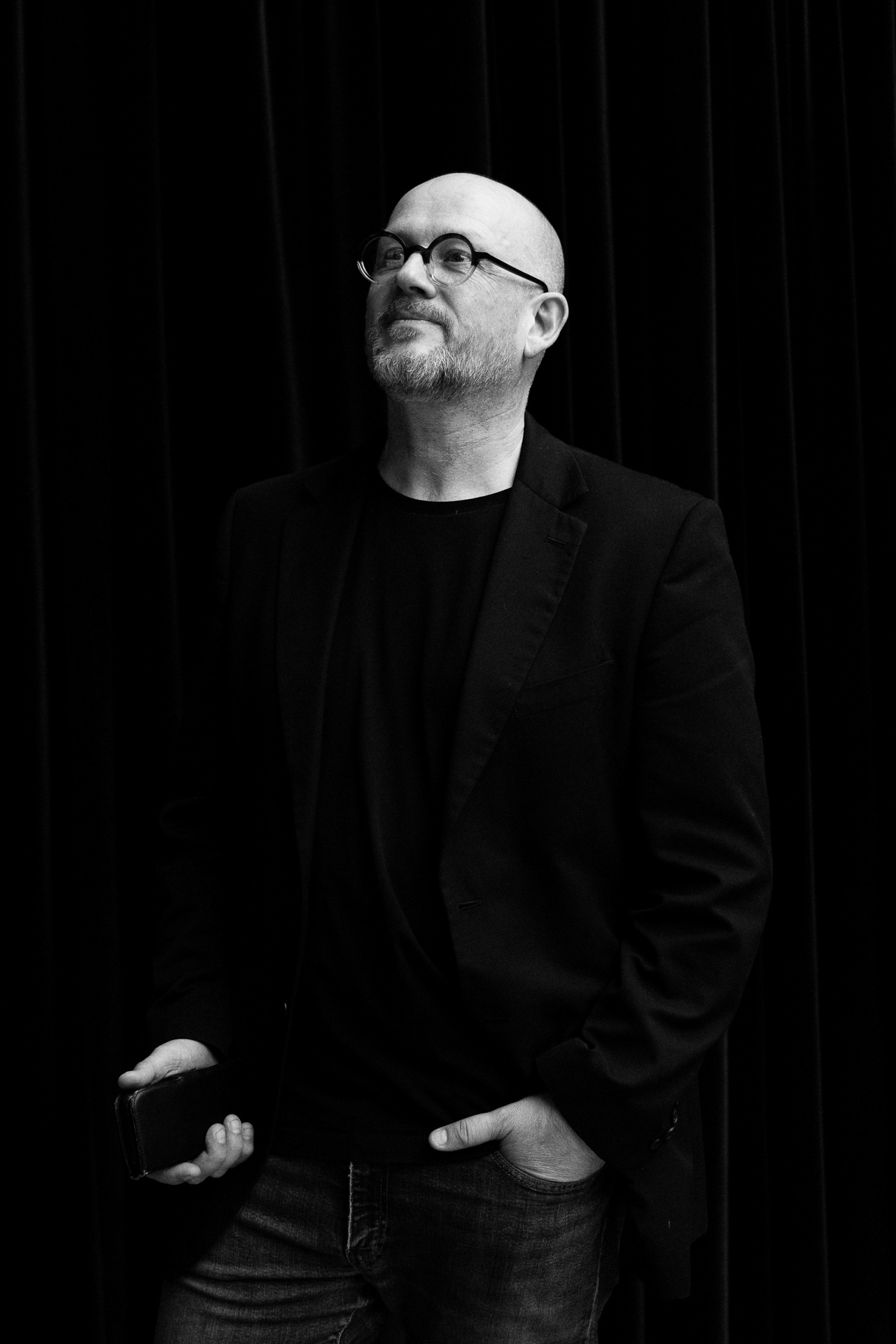
Professor Andrew Dubber is the Director of MTF Labs, a Senior Researcher and Steering Board Member at the Industry Commons Foundation and is an author, academic, media producer and broadcaster.
He is an innovation and management consultant, advisor and board member of AI and music technology startups and other digital creative businesses, as well as across a wide range of domains within both the private and public sectors.
Dubber’s work is frequently characterised by his interest in emerging technologies and the cultures and ethics surrounding them. While there is often a broad diversity in the range of projects he undertakes, several connecting threads run throughout.
He is always interested in creating conversations and connections across different verticals of thought as a way to break down silos, whether between different industry sectors, academia and industry, generational divides, or (more frequently) art and science.
His projects typically focus on issues of justice, inclusion, and sustainability, as well as the power of education, system design, and hands-on, collaborative experimentation as tools to address them. He consults on leveraging the affordances of technologies to create value and drive both commercial and societal change.
He is currently engaged in establishing a cross-domain TEF North Industrial Innovation Centre and Testing and Experimentation Facility in the North of Sweden. He leads several tasks within European-funded projects: LUMEN, which leverages leading-edge technologies to advance cross-domain collaboration between Social Sciences and Humanities, Mathematics, Molecular Dynamics and Earth Systems; and GRAPHIA, which is building the first comprehensive SSH Knowledge Graph (KG) that integrates currently disconnected data into a single entry point, leveraging advanced AI for data visualisation. As part of LUMEN, he hosts the Inside EOSC podcast – featuring interviews with key thinkers from the European Open Science Clound ecosystem and the LUMEN project.
As Director of MTF Labs, Dubber has developed and overseen international initiatives such as JUST Data, which works to establish a standard for ethical data annotation; Open Minds, which focuses on Design for Radical Inclusion; and Framtidsreceptet, a partnership with Polarbröd to develop new products and prototypes that address issues of food sustainability.
He was awarded a Professorship in Music Industry Innovation at Birmingham City University’s Centre for Media and Cultural Research in 2013 and was recognised as an Arts and Humanities Research Council (AHRC) Knowledge Transfer Fellow. The “Innovation” in his professorial title refers both to technological and social innovation. Throughout his academic career, Dubber was at the forefront of practice-based research and Knowledge Exchange projects, enabling university and industry technology transfer. He has also published extensively and presented at over 100 international academic conferences.
His academic professorship is leveraged in his role as Senior Researcher at the Industry Commons Foundation. He co-authored the Expanding EOSC research paper, which delivers models for technology transfer and engagement with scientific research user groups outside of academia to scale the impact of the European Open Science Cloud (EOSC).
He is also the co-author of Intellectual Property and the Industry Commons: Unlocking the Renaissance, which proposes new ways in which IP attribution and provenance work in data markets can result in an explosion of new types of innovation. He is the lead author of the Regional Innovation Model Handbook for the EU Horizon-funded project DigiNEB.
Dubber is an advisor to the UK non-profit ArtEO, which provides residencies for prominent and upcoming artists to create works that use or respond to Earth Observation satellite data. He was an advisor to Bandcamp from before its launch in 2007 until its sale to Epic Games in 2023, and is now on the board of two startups that leverage AI systems to empower creatives.
His 2022 film Wetlands was an Official Selection at over 15 international film festivals and won multiple awards, including Best Short Documentary at the Paris Independent Film Festival and Best International Documentary at ART-TUR Festival in Portugal.
Dubber is also the creator and host of the MTF Labs podcast, and he presents and produced the NEB Concepts podcast, which explores the intersection of digital innovation and the New European Bauhaus movement.
He is the author of several books about media and technology, including Radio in the Digital Age (Polity, 2013), Understanding the Music Industries (Sage, 2012), Music In The Digital Age (Leanpub, 2012) and The 20 Things You Must Know About Music Online (Leanpub, 2007). He is currently working on two new books, one of which is The Right Next Song, about the cultures and meanings of putting songs in order (primarily in the context of mixtapes, setlists and playlists), and the other is under wraps for the moment, but still very much ‘on-brand’.
Dubber’s practice-based and experimental research work focuses primarily on digital mediation and interpretations of media in social and cultural networks, particularly within community projects that use music technology as a tool for social change. This research work took him to India, Colombia, Venezuela, Uganda and Brazil and led him to find a natural setting for his work and interests within Music Tech Fest and MTF Labs.
Dubber has been blogging since 2002 and has been a podcaster since 2005. In 2006, he founded New Music Strategies, a pan-European digital music strategy think tank and consultancy, and in 2008, helped to found Un-Convention, which has to date held over 110 independent music industry conference events on five continents.
Originally from Aotearoa, New Zealand, Dubber currently lives in Sweden and works primarily in Europe. Like most people in the 21st century, his day-to-day work mostly involves sending and receiving emails. He enjoys cooking, record shopping, new stationery, old tech, the company of his dogs and the blissful quiet of the Scandinavian forest.
He no longer uses social media.
What I do
A friend once called me an “International Man of Miscellany“, which I thought was quite good.
I’m okay at quite a few things, fairly good at some others, and have become reasonably expert in a handful of (occasionally related) domains. It’s breadth rather than depth, and that is what drives my consultancy approach. Despite a seemingly niche professorial title, to the extent that I could be said to “specialise” in anything, it would be in joining the dots. I can’t compose a film soundtrack for you, program an AI application, build a green energy solution for small farms, design an apartment building, lead an indigenous community cultural initiative or explain particle physics, but I can see where those things need to happen, bring all of those exact people into a room together and communicate well enough with all of them to help create something that leverages their skills, understanding and expertise to address a grand societal challenge. And then I can write a report that explains or recommends next steps.
That includes
Consultancy, Innovation Management, Innovation Prototyping Events, Research (media / culture / technology / industry / policy), Writing (books / papers / reports / essays / articles), Board Membership, Public Speaking & Presentation, Conference Moderation, Strategic Introductions, Sustainability and Inclusion Projects, Ecosystem Management, Bridging Industry Collaborations, Managing Horizon Europe Projects, Media Production, Documentary Filmmaking, Radio & Podcast Presentation, Executive Education, Education Technology, Curriculum Design, Music Production, Music Curation…
I've worked with
Bandcamp (US), TU Delft (Netherlands), InnovaWood (Belgium), Microsoft Research NERD Labs (US), BBC (UK), MIT Media Lab (US), CERN (Switzerland), Oxford University (UK), Musikmesse (Germany), Polarbröd (Sweden), Berklee College of Music (US), Barbican (UK), ZKM Centre for Art and Media (Germany), Highlands and Islands Enterprise (UK), Umeå Energi (Sweden), Abbey Road Studios (UK), European Open Science Cloud – EOSC (Belgium), TU Wien (Austria), Splice.com (US), Ericsson (Sweden), Un-Convention (UK), Music Basti (India), Tiuna El Fuerte Cultural Park (Venezuela), Serious (UK), Sounds Aotearoa (New Zealand), Session (Sweden), Native Instruments (Germany), IRCAM (France), University of Aveiro (Portugal), Aarhus Universitet (Denmark), Trans Europe Halles (Sweden), Nura (Australia), SONOS (US), KTH University (Sweden), Warp Records (UK), Umeå Institute of Design (Sweden), Nordic Semiconductor (Norway), Hackoustic (UK), Roland (Germany), Cisco (US), SAE Institute (UK), ABB (Sweden), JAZZIZ (US), British Council (UK), Soundcloud (Germany), Penguin Books (UK), Leap Motion (US), OPERAS (Belgium), ImagiLabs (Sweden), NYU (US), Sound Diplomacy (UK), Oslo University (Norway), Element 14 (UK), Swedbank (Sweden), European Commission (Belgium), Serato (New Zealand), London Symphony Orchestra (UK), Umeå Kommun (Sweden), Philips (Netherlands), ArtEO (UK), Politecnico di Milano (Italy), Fraunhofer (Germany), Warner Music (UK), ATOS (Spain), Ableton (Germany), Ministry of Culture (Slovenia), NZ Music Commission (New Zealand), SXSW (US), Slush (Finland), Goldsmiths (UK), McGill University (Canada), Universitat Politecnica de Valencia (Spain), Max Planck Institute (Germany), Tieto Evry (Sweden), Drake Music (UK), Örebro University (Sweden), Infobip (Croatia), Soundcamp (UK), Volvo (Sweden), Accessible Arts and Culture – ACCAC (Finland), Polis University (Albania), Ninja Tune (UK), Spotify (Sweden), Skoog Music (UK), Dirac Research (Sweden), FabLab (Croatia), INESC TEC (Portugal), AIN (Spain), RS Components (UK), Ars Electronica (Austria), Music Technology Group (Spain), Human Instruments (UK), CRHackLab (Italy), Queen Mary University of London (UK), Šiauliai Tech (Lithuania), Sound and Music (UK), GoCo Health Innovation City (Sweden), CD Baby (US), SCA (Sweden), Linköping Science Park (Sweden), Harvard University (US), Vinnova (Sweden), European Association for Architectural Education – EAAE (Belgium), Aveiro Capital of Culture (Portugal), Red Bull (Austria), Sandbox Education (UK), Chalmers Tekniska Hogskola (Sweden), International Data Spaces (Germany), Volkswagen AutoEuropa (Portugal), Asseco Ceit As (Slovakia), Atlantis Engineering (Greece)…